The most effective sleeping position for shoulder pain is supine (on your back) with the affected arm supported by a pillow to reduce subacromial impingement.
For side sleepers, lying on the unaffected side while hugging a body pillow maintains neutral joint alignment and minimizes rotator cuff compression.
At Anaconda, we’ve helped over 300,000 athletes train, recover, and perform at their best. Our shoulder support gear is designed for stability, comfort, and recovery, and has helped thousands reduce night pain and protect the affected shoulder during sleep. Real solutions are possible when you set up your shoulder joint for rest, not strain.
In this guide, we’ll show you:
-
Why nighttime shoulder pain often spikes once you're in bed
-
The best sleep positions to reduce pressure on the shoulder joint
-
How to use pillows to stabilize your affected shoulder
-
Practical pain relief strategies to wind down comfortably
-
When it’s worth getting your shoulder checked by a doctor
Try one of these changes tonight. With the right setup, you’ll give your shoulder the chance to rest and start healing while you sleep.
Key Takeaways
-
Sleeping on your back or on the non-painful side with proper pillow support usually provides the best shoulder pain relief at night.
-
Avoid sleeping on your stomach or directly on the painful shoulder, as these positions increase subacromial pressure and typically worsen symptoms.
-
Simple pillow setups you can try tonight: place a pillow under the affected arm when on your back, hug a body pillow when on the unaffected side, or use a reclined position after surgery or during severe flare-ups.
-
Consistency matters. Give a new sleep position 2-3 nights before deciding it doesn’t work, as your body needs time to adapt.
-
Seek urgent medical care if night shoulder pain accompanies trauma, fever, chest pain, rapidly worsening weakness, or new numbness in your hand.
Why Does Shoulder Pain Worsen at Night?
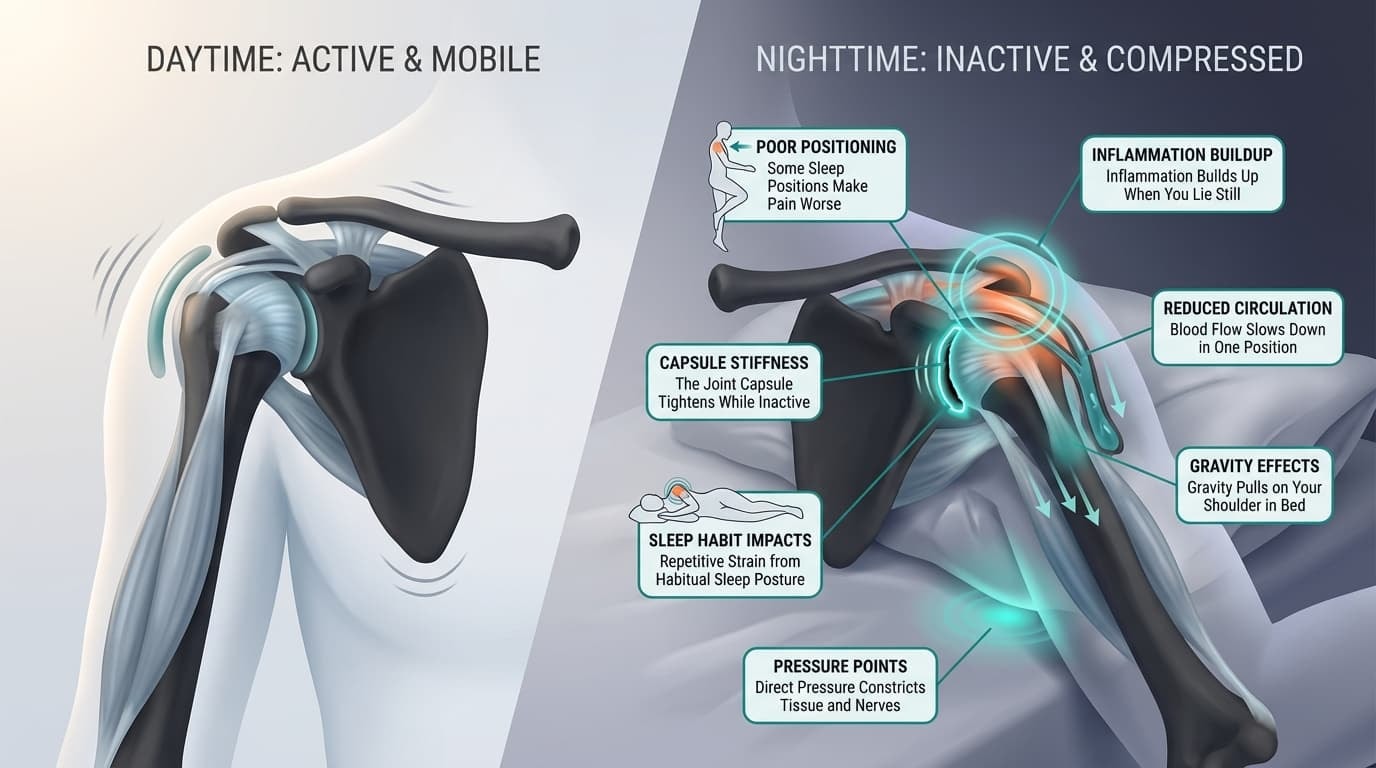
If your shoulder pain gets worse at night, you’re not imagining it. Many people with sore shoulders say bedtime is the hardest part of the day.
There are clear reasons this happens. It doesn’t mean something is wrong with your healing. It’s often about how the body responds to stillness, pressure, and sleep position.
Here are the main reasons nighttime shoulder pain becomes more noticeable, especially when you try to sleep.
1. Inflammation Builds Up When You Lie Still
During the day, movement helps your body flush out swelling and keep things loose. At night, you stay in one position for hours.
Prolonged immobility stagnates synovial fluid drainage, causing intra-articular pressure to spike and triggering nociceptors in the rotator cuff.
Doctors have found that people with more pain at night often have higher levels of inflammation in their bodies.
A 2022 study in the Journal of Shoulder and Elbow Surgery established a direct correlation between inflammatory markers and sleep disturbance.
2. Blood Flow Slows Down in One Position
Lying in the same position for too long slows blood flow, especially if your arm is hanging or unsupported. Poor circulation means your tissues don’t get the oxygen they need. This can make the shoulder joint stiff and sore in the morning.
A review in the Journal of International Medical Research found that people with shoulder problems often sleep worse than people with leg or back pain. One reason was reduced circulation during sleep.
3. Gravity Pulls on Your Shoulder in Bed
When you are standing or sitting, gravity helps keep your shoulder joint in a better position. But lying flat changes how gravity works on your body. It can shift pressure onto the shoulder blade, tendons, and capsule. That extra pull can worsen pain, especially in sensitive or healing areas.
A study showed that certain sleep positions increase pressure in the shoulder. Sleeping on your sore side or with your arm tucked against your body puts more stress on the joint.
4. Some Sleep Positions Make Pain Worse
How you sleep matters. Lying on your affected shoulder, reaching your arm overhead, or tucking your hand under your pillow can all cause problems. These positions squeeze the space in your shoulder and put pressure on the rotator cuff muscles.
5. Stiff Shoulders Hurt More at Night
If your shoulder is stiff, it can be hard to find a comfortable position. Conditions like frozen shoulder cause the capsule around your joint to tighten. Even small movements can feel sharp and deep.
Night pain is often one of the first symptoms of frozen shoulder. It’s also one of the most common reasons people see a doctor for shoulder pain.
6. Poor Sleep Habits Can Make It Worse
Sometimes it’s not the shoulder itself, but how we sleep. Using the wrong pillow, letting your arm hang off the edge of the bed, or rolling onto the sore side can all make things worse. These habits keep pressure on the shoulder and prevent it from relaxing.
In a study published in BMC Women’s Health, 64% of people with shoulder pain reported that poor sleep posture worsened their pain. Many felt better after changing their sleep setup and supporting the arm with a pillow.
7. Sleep Problems Are Common in Shoulder Injuries
If your shoulder pain is keeping you up at night, you're not alone. Between 70 and 89 percent of people with rotator cuff injuries have trouble sleeping. Even people who are doing therapy or using medication often still struggle with sleep.
Doctors use a test called the Pittsburgh Sleep Quality Index to check how well people sleep. Research shows that people with shoulder injuries often score in the poor sleep range.
What Are the Best Sleep Positions for Shoulder Pain?
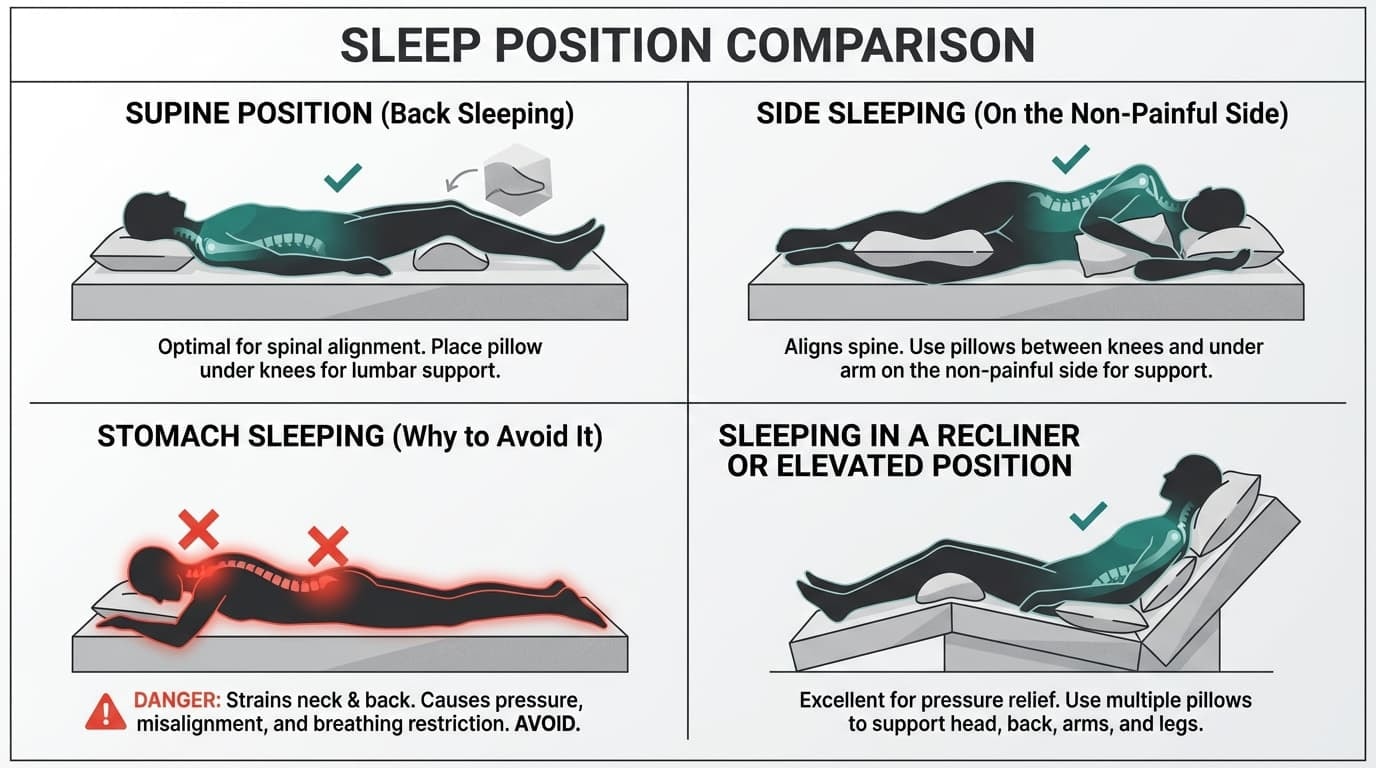
Finding the right way to sleep when your shoulder hurts can make a big difference. The wrong position can make shoulder pain worse, while the right setup can support healing and help you get restful sleep.
If you’re dealing with nighttime shoulder pain, your sleep position matters a lot. Research shows that the pressure on the shoulder varies depending on how you lie. Certain sleeping positions for shoulder pain can increase joint pressure and worsen discomfort overnight.
The general rules are:
-
Avoid lying directly on your affected shoulder
-
Do not sleep on your stomach for long periods
-
Keep your sore arm supported and in a neutral spot, not raised above your head or pulled behind your back
Let’s break down each shoulder pain position and how to set it up correctly.
1. Sleeping on Your Back
The Supine Position (Back Sleeping) is the biomechanical gold standard for shoulder relief because it places the glenohumeral joint in a neutral, open-packed position, minimizing stress on the supraspinatus tendon.
How to set it up:
-
Lie flat on your back with a supportive pillow under your head. Make sure your neck stays in line with your spine.
-
Use another pillow under the elbow and forearm of your sore shoulder. Let your hand rest on your chest or stomach.
-
Keep the arm slightly away from your body with a gentle bend at the elbow.
-
If your lower back feels strained, place a small pillow under your knees for extra support.
This position helps take pressure off your rotator cuff muscles and prevents the shoulder from dropping toward the mattress, which can worsen pain.
Try this setup tonight and see how your body responds after two or three nights. It takes time to adjust, but it may help you finally get some restful sleep.
2. Side Sleeping (On the Non-Painful Side)
If you're someone who always sleeps on your side, switching to your back might feel difficult. The good news is you don’t have to change everything. Side sleeping can work well if you lie on the opposite side and properly support your affected shoulder.
How to set it up:
-
Lie on your non-painful side
-
Use a good pillow to keep your neck and head in a straight line
-
Hug a firm or body pillow to your chest. Let your sore arm rest on this pillow, slightly forward and supported
-
Bend your elbow a little and let your hand rest at chest level
-
Place another pillow between your knees to keep your hips and back in a better line
-
You can also put a small pillow behind your back to stop yourself from rolling onto your painful side during the night
This setup helps relieve shoulder pain by taking pressure off the joint and keeping the arm in a supported, natural position.
Use a firm body pillow to cradle your shoulder and sleep more peacefully. This position can help reduce tension and support healing while you sleep.
3. Stomach Sleeping (Why to Avoid It)
Prone positioning (Stomach Sleeping) forces the neck into excessive rotation and places the shoulder capsule in anterior translation, which can exacerbate instability and compress the neurovascular bundle.
Here is why:

Sleeping like this can strain your shoulder blades, pinch the rotator cuff muscles, and pull on the joint in painful ways. It may also make it harder to breathe deeply and get restful sleep.
How to train away from stomach sleeping:
-
Use a firm body pillow on your front to block you from turning onto your stomach
-
Try sleeping on your back with a pillow under your knees to stay comfortable
-
Be patient, as it may take a week or two to fully adjust
Avoiding stomach sleeping is one of the simplest ways to reduce shoulder pain at night.
4. Sleeping in a Recliner or Elevated Position
If you have just had shoulder surgery or are experiencing a severe flare-up, sleeping in a reclined or semi-upright position can help. It keeps your shoulder from moving too much and lowers pressure on the joint.
This position is often helpful for people recovering from rotator cuff surgery or dealing with severe nighttime shoulder pain.
How to set it up:
-
Use a recliner or a bed that can elevate your upper body 30 to 45 degrees
-
Keep your shoulders behind your hips and avoid hunching forward
-
Support your sore arm with one or two pillows under the forearm and elbow
-
Make sure the shoulder is resting close to the body and not pulling down
-
If your doctor gave you a sling, keep it on during sleep unless told otherwise
While this is not a long-term solution, it can help you get through the first few weeks of healing.
Recovering from surgery? A reclined setup might be your best first step. Give your shoulder support without stressing the joint while you sleep.
How Do You Configure Pillows for Shoulder Pain Relief?
If your shoulder still hurts at night, even after changing your sleep position, the next step is fixing your pillow setup. For many people, this is the missing piece. Even the best sleeping positions won’t work if your affected arm isn't properly supported.
The good news is you do not need expensive gear to feel better. You can use regular pillows, placed correctly, to help your body relax, maintain good alignment, and avoid further strain on your shoulders.
At Anaconda, we’ve seen how small changes can make a big difference. Thousands of athletes have told us that once they adjusted their pillow setup and used our brace for support, they were finally able to rest without pain.
Below are three proven setups. Choose one based on how you sleep and how much pain you’re dealing with.
Key Pillow Roles
To improve your sleep, place pillows in these areas:
-
Under the affected arm, so it doesn’t fall or pull down
-
In front of the chest or behind the back, to prevent rolling onto the affected side
-
Between the knees, to keep your hips and spine in a straight line
-
Under your head, use a supportive pillow that keeps your neck in line with your spine
People with neck and shoulder pain may also benefit from slightly contoured pillows, but what matters most is comfort and alignment.
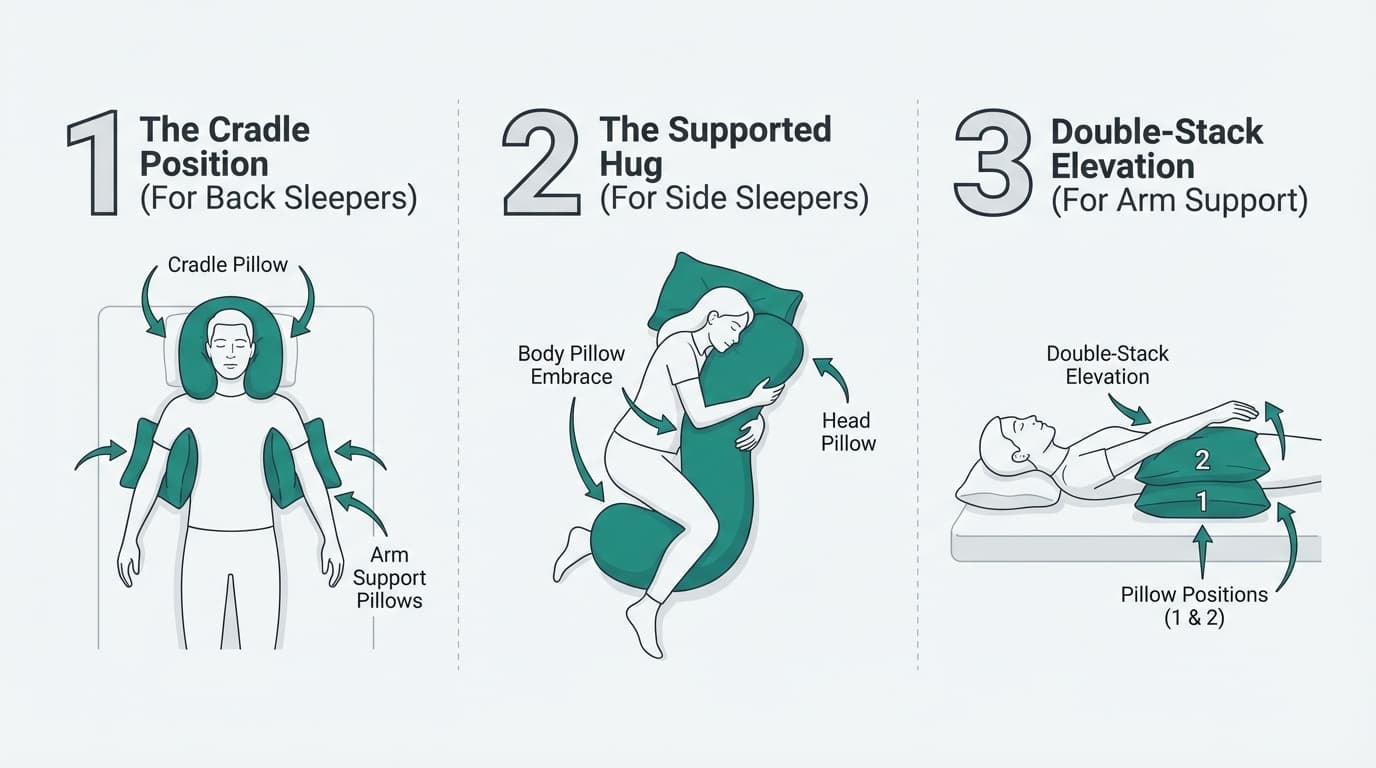
1. The Cradle Position (For Back Sleepers)
This setup works well if you sleep on your back and want to gently support your shoulder without adding pressure. It’s a great option if you have general soreness, early physical therapy goals, or shoulder stiffness that gets worse when your arm moves too much.
How to set it up:
-
Lie on your back with a supportive pillow under your head, keeping your neck in line
-
Place one pillow under your elbow and forearm so your affected arm rests comfortably on your chest or stomach
-
Add a rolled towel or soft pillow along your side to remind your shoulder to stay relaxed and close to your body
This position keeps the shoulder from “dropping” or stretching awkwardly during sleep. It reduces tension in the rotator cuff muscles and can help you fall asleep more easily without discomfort.
We’ve designed the Anaconda Shoulder Brace specifically to support the shoulder in this kind of sleeping position. It helps keep the joint secure and reduces nighttime strain, especially during recovery. Many of our customers report better sleep within the first few nights of using it.
Try this setup tonight and pair it with the Anaconda Shoulder Brace for secure, supported sleep. Shop now to protect your recovery and stay consistent.
2. The Supported Hug (For Side Sleepers)
If you prefer side sleeping but your shoulder pain gets worse at night, this setup is for you. It works best when you sleep on the non-painful side and use pillows to fully support the affected arm.
How to set it up:
-
Lie on your non-painful side
-
Use a supportive pillow under your head to keep your neck straight
-
Hug a firm body pillow or a thick standard pillow
-
Let your affected arm rest across the pillow, slightly in front of your body, elbow bent
-
Place a pillow between your knees to keep your hips in line
-
Put a flat pillow or towel behind your back to stop yourself from rolling onto the affected side
This keeps the affected arm in a natural position and relieves pressure on the joint. It also helps reduce the twisting that can occur when sleeping on your side if your spine and hips are not supported.
Athletes who use our Anaconda Shoulder Brace with this pillow setup say it gives them peace of mind at night. The brace prevents sudden movements and holds the shoulder gently in place. It’s especially helpful if you’re in physical therapy or healing from overuse injuries.
Use a firm body pillow to cradle your shoulder and add our Anaconda Shoulder Brace for extra nighttime protection. Stay on track with your recovery while you sleep.
3. Double-Stack Arm Support (For Recliner or Elevated Sleep)
This setup is ideal if you sleep in a recliner or have your upper body elevated in bed. It’s often recommended right after shoulder surgery or during flare-ups when nighttime shoulder pain is most intense.
How to set it up:
-
Use a recliner chair or elevate your bed head to a 30 to 45 degree angle
-
Stack two pillows under your affected arm, supporting it from the elbow to the wrist
-
Make sure the arm is level with or slightly above your heart to improve circulation and comfort
-
Keep your shoulder close to your body, not hanging down
-
If your doctor gave you a sling, wear it while you sleep unless told otherwise
This setup keeps your shoulder stable and still, which is important when recovering from injuries or surgery. It reduces pressure on the joint and limits movement that can cause pain or interrupt sleep.
Our Anaconda Shoulder Brace was developed with this type of recovery in mind. It offers soft, structured support without restricting circulation. Whether you're resting in a recliner or recovering from surgery, it adds a layer of comfort and confidence to your healing process.
Recovering from surgery or flare-ups? Use this setup with the Anaconda Shoulder Brace to stay supported and protect your progress during sleep.
How Can You Manage Shoulder Pain Before Bed?
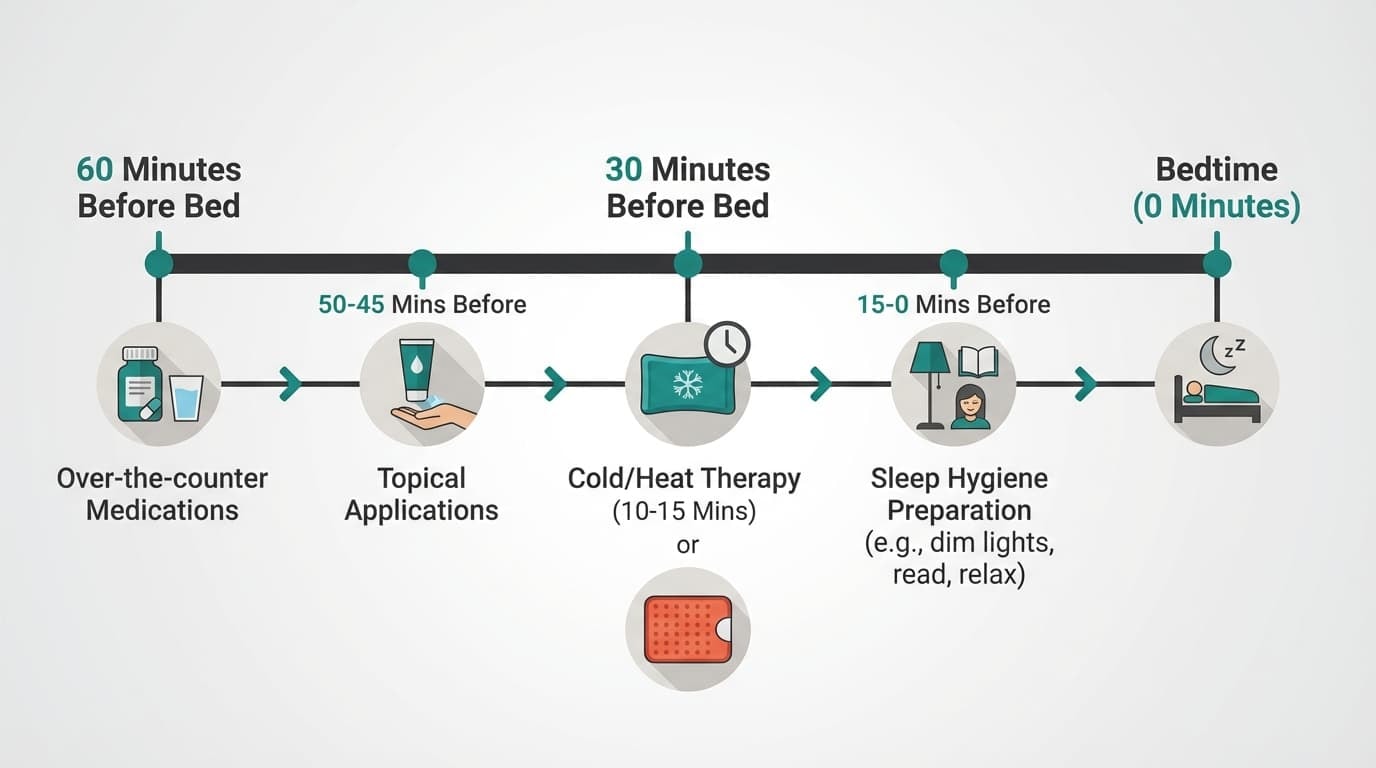
Even if you're sleeping in the right position and using the right pillows, shoulder pain can still keep you up at night. That’s why managing pain before you get into bed is just as important as how you sleep.
Taking care of your body in the evening can reduce pain, calm inflammation, and help your mind and muscles prepare for restful sleep.
Pain Relief Tools and Timing
If your shoulder hurts more in the evening, it helps to be prepared. Using the right tools at the right time can make a big difference in how you fall asleep and how long you stay asleep.
Pain relief options that may help:
-
Over-the-counter medications, such as acetaminophen or ibuprofen, can help reduce pain and inflammation. Always follow your doctor’s directions or advice.
-
Cold packs help with swelling. Place a cold pack wrapped in a cloth over your affected shoulder for 10 to 15 minutes before bed.
-
Heat therapy relaxes muscles and eases shoulder stiffness. A warm shower or heating pad can help if your shoulder feels tight or sore.
Try using these treatments about 30 to 60 minutes before bedtime so they have time to take effect before you lie down.
Tip: Don’t wait until the pain is too severe. Use these tools early to prevent a pain spike that could keep you awake.
Sleep Hygiene and Nighttime Habits
How you prepare for bed affects how your body experiences pain. At night, when everything is quiet, the brain becomes more focused on physical sensations. If you’re already stressed or restless, pain can feel worse.
Creating calming routines before bed can reduce this stress and help you fall asleep faster.
Helpful habits to try:
-
Go to bed and wake up at the same time every day, even on weekends
-
Keep your room cool, dark, and quiet
-
Stop using phones, tablets, and TVs at least 30 minutes before bed
-
Avoid caffeine in the afternoon or evening
-
Create a relaxing routine, like reading, gentle music, or deep breathing
If you wake up during the night, don’t stay in bed feeling frustrated. Get up, gently stretch or reposition your affected arm, or take a moment to relax before trying to sleep again.
Good sleep lowers inflammation. This isn’t fluff—it’s biology. When you sleep well, your body releases healing hormones, repairs tissues, and calms your nervous system. It’s one of the most powerful ways to support recovery.
Topical Options and Alternative Pain Relief
If you want relief without taking pills, you can also try topical pain creams or gels. These products are applied directly to the skin and usually cause fewer side effects than oral medications.
Types of topical products:
-
Cooling creams with menthol
-
Warming creams with capsaicin
-
Topical anti-inflammatories like diclofenac gel
These are best used around the shoulder area in the evening. Just make sure to follow the label and wash your hands after use.
Tip: If you're unsure which product is safe for you, ask your doctor or pharmacist, especially if you already take medication.
Why Less Can Be More With Strong Pain Meds
If you’re recovering from surgery or dealing with severe pain, your doctor may have prescribed strong pain medicine, like opioids. These can help in the short term, but they’re not always good for sleep in the long run.
Why stronger meds are not always better:
-
They might help you fall asleep, but they often cause lighter, broken sleep
-
Your body may get used to them, so they become less effective over time
-
They can cause side effects like daytime sleepiness, constipation, or dizziness
-
Long-term use is linked to slower healing and poorer sleep quality
Studies show that people who rely too much on these medications often struggle to get into deep, healing sleep. That’s why doctors usually recommend using them only when needed and combining them with other strategies.
If you are using prescription meds, ask your doctor about the best time to take them. In many cases, they work best when taken 30 to 60 minutes before bed. Never change your dose without checking first.
Instead of relying only on medication, build a strong nighttime routine that includes movement, positioning, and tools like the Anaconda Shoulder Brace.
Which Daytime Movements Improve Nighttime Shoulder Comfort?
What you do during the day affects how your shoulder feels at night. If your shoulder stays still for too long, it often becomes more stiff, sore, or irritated by bedtime.
Gentle movement helps keep your shoulder joint healthy and less reactive to pressure at night. It’s not about pushing through pain. It’s about helping your body stay mobile and relaxed so you can wind down more easily when it’s time to sleep.
Why Movement Matters
When your shoulder barely moves throughout the day, the muscles and capsule around the joint can tighten. This is common in conditions like frozen shoulder, impingement, and post-surgery recovery.
Safe movement helps:
-
Improve blood flow
-
Reduce inflammation buildup
-
Prevent muscles from stiffening
-
Ease that deep aching feeling that often shows up at night
You don’t need a full workout. You just need light, controlled movement spread out through the day.
Easy Exercises That Help
These simple moves are often recommended by physical therapists and rehab professionals. You can do them at home, in short sessions, without any special equipment.
1. Pendulum Swings
Let your arm hang freely while gently swinging it in small circles. This helps loosen the joint without adding strain.
2. Table Slides
Place your hand on a towel or cloth on a table. Gently slide it forward to stretch the shoulder. Go only as far as feels comfortable.
3. Cross-Body Arm Stretch
Bring your affected arm across your chest and hold it with the opposite hand. Stop if you feel sharp pain; just aim for a gentle pull.
These exercises should not increase pain during or after. If anything feels worse the next day, pause and check with your therapist or doctor.
Mind Your Posture Too
Long hours at a desk or looking down at your phone can cause poor posture. This pulls your shoulders forward and tightens the muscles around your chest and upper back. That can lead to more tension at night, especially when you try to lie flat.
To improve posture throughout the day:
-
Sit upright with your shoulders gently back
-
Take a break every 30 to 60 minutes to stand or stretch
-
Avoid slouching or rounding your shoulders for long periods
These small posture checks can make a big difference in how your shoulder feels when you lie down at night.
Don’t Overdo It
Too much movement or heavy lifting can lead to flare-ups, even if you’re trying to stay active. If your shoulder is sore, swollen, or healing, stick to gentle mobility rather than aggressive stretching or strength training.
Watch for signs of overuse:
-
Sharp pain during or after movement
-
Increased stiffness the next morning
-
Swelling or a feeling of heat around the joint
More isn’t always better. Focus on quality movement, not quantity. And don’t force through pain just to stay on track.
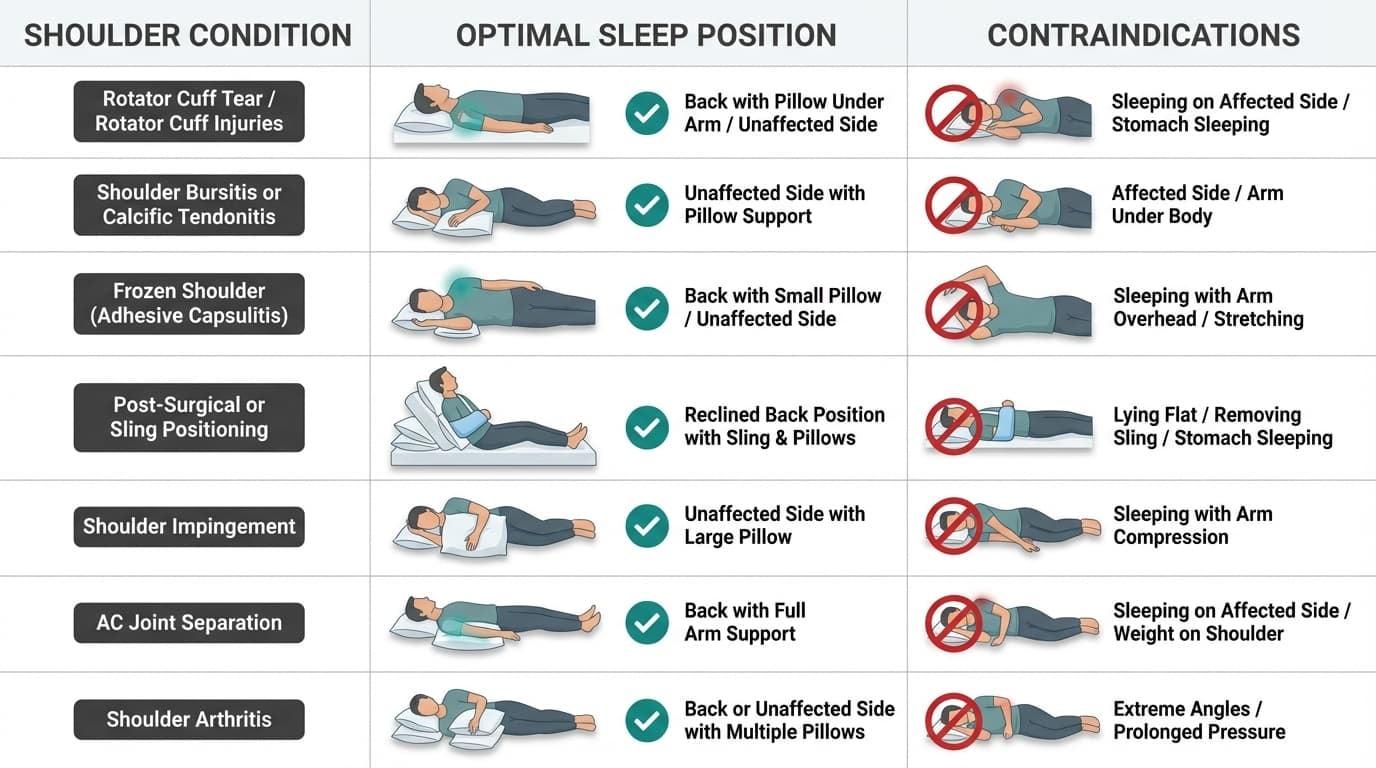
What Is the Optimal Sleep Position for Specific Shoulder Conditions?
Different shoulder problems create different pain patterns at night. The best setup depends on what is actually causing your pain. Use the table below to match your condition with the most effective sleep position and support strategy.
How Long Until Sleeping Gets Easier?
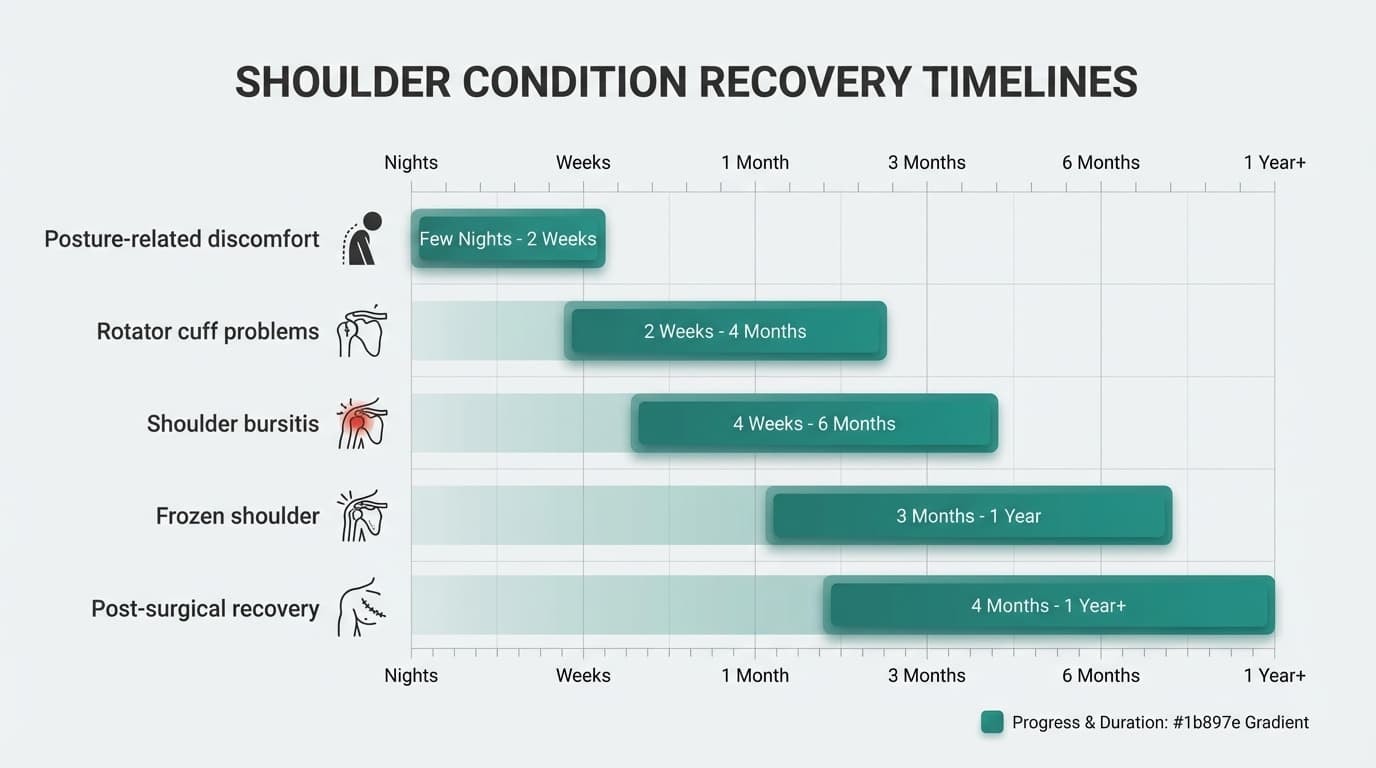
Getting restful sleep with shoulder pain takes consistency, the right setup, and a little patience. Depending on the condition, it may take a few nights or a few months for sleep to improve.
Below is what you can generally expect based on your diagnosis:
Track Your Progress With a Simple Sleep-Pain Diary
Not sure if you're improving? Keep a sleep-pain diary for 1–2 weeks. Each night, jot down:
-
Your sleep position
-
Pain rating before bed and upon waking (scale of 0–10)
-
How many times have you woken up from shoulder pain
-
Anything that helped (pillow setups, brace, stretching, etc.)
This helps you spot patterns and share useful insights with your healthcare provider.
Progress Takes Time
We know it’s frustrating when your shoulder hurts at night. You're not weak. You're not doing something wrong. Healing isn’t instant—and the pain isn’t all in your head.
Stick to the setup that works best for your shoulder joint, and don’t give up after one bad night. Give new positions at least 2–3 nights before making changes. Your body is adjusting, and small changes add up.
When to See a Doctor
Most shoulder pain can be managed at home, especially when caused by overuse or mild injuries. But there are times when it’s important to get medical help.
Red Flags: Call Your Doctor If You Have:
-
Sudden pain after a fall or trauma
-
You can’t raise your arm at all
-
Numbness, tingling, or clumsiness in your hand or fingers
-
Fever, swelling, or redness in the shoulder
-
Nighttime pain that wakes you every night for more than 2–3 weeks
-
Any shoulder or arm pain combined with chest pain or shortness of breath (urgent)
What to Track and Bring to Your Appointment
-
Your sleep-pain diary
-
Which sleeping positions are uncomfortable
-
Which setups reduced pain (if any)
-
Medications or braces you’ve tried
-
What makes your shoulder pain worse or better
This helps your clinician better understand what’s going on and speeds up the path to relieve pain and restore sleep.
Don’t wait too long to get clarity. Even if the pain feels manageable now, getting an early diagnosishelps prevent long-term issues. And the sooner you understand your shoulder’s needs, the sooner you can sleep in peace.
Final Words
Sleeping with shoulder pain isn’t just about getting through the night. It’s about giving your body the right support so healing can actually happen. With the right sleep position, a smart pillow setup, and simple daytime habits, many people can reduce pain, sleep longer, and wake up feeling more in control.
Progress takes consistency. Small changes, done every night, add up over time. And if pain isn’t improving, getting the right diagnosis can make all the difference.
At Anaconda, we design recovery and support gear to work with your body, not against it. Trusted by over 300,000 athletes, our shoulder supports and recovery tools are built to help you protect your progress day and night.
Better sleep is possible. Start with one change tonight and build from there.
FAQs About Sleeping with Shoulder Pain
Quick answers to the most common questions about sleeping better with shoulder pain.
Is it better to sleep with my arm above my head or by my side?
For most shoulder conditions, sleeping with the arm above the head increases impingement and strain, especially in rotator cuff problems. Keep the arm by the side or slightly forward, supported on a pillow, with the elbow bent and the shoulder in a neutral position. While a few people with mainly muscular tightness might feel brief relief overhead, if this position causes pain during the night or creates morning stiffness, it should be avoided.
Should I use a firm or soft mattress for shoulder pain at night?
There’s no single ideal firmness. Very hard mattresses can increase direct pressure on the shoulder for side sleepers, while overly soft ones let the body sink and twist the spine. A medium or medium-firm mattress works for most people. If side lying is necessary, a softer topper can reduce localized shoulder pressure. Adding a 5–8 cm foam or latex topper is a practical alternative to replacing your entire mattress.
Can specific shoulder exercises before bed improve my sleep?
Gentle, pain-free range-of-motion exercises and gentle stretching (pendulum swings, light cross-body stretches) before bed can reduce stiffness and sometimes ease night pain. However, avoid heavy resistance training or aggressive stretching right before sleep, as this can flare symptoms and affect sleep quality. Those with significant limitations or post-surgical restrictions should get personalized guidance from a physiotherapist.
Is it safe to sleep with an ice pack or heat pad on my shoulder all night?
No. Leaving ice or heat on the shoulder overnight risks skin damage, burns, or frostbite, especially if sensation is reduced. Use ice or heat for 10–20 minutes before bed with a cloth barrier, then remove it before falling asleep. Timed devices with automatic shut-off may be safer, but should still be used cautiously per manufacturer instructions.
Can poor neck posture or a neck problem be the real cause of my night shoulder pain?
Yes, the cervical spine can refer pain into the shoulder and upper arm, sometimes mimicking primary shoulder disease. Signs suggesting a neck contribution include pain radiating past the elbow, tingling or numbness in the hand, or pain worsening with neck movements rather than shoulder movements alone. Anyone with these features should seek medical assessment, as neck-related issues require different management than isolated shoulder pathology.