


The best knee brace for Osgood-Schlatter’s disease is an infrapatellar strap (patellar tendon strap) that applies targeted pressure to the patellar tendon.
According to 2026 clinical standards, these supports reduce mechanical tension at the tibial tuberosity by 20-30%, alleviating pain during high-impact sports like basketball and soccer.
The good news?
A well-fitted knee brace for Osgood-Schlatter’s disease or a knee strap can ease discomfort and protect the knee while it heals.
This guide shows you exactly how to help by providing evidence-based answers to:
-
How does a knee brace facilitate patellar tendon off-loading?
-
What are the common pitfalls in pediatric bracing?
-
When should an athlete transition from a strap to a compression sleeve?
-
Which rehabilitation exercises maximize bracing efficacy in 2026?.
Key Takeaways
-
Osgood-Schlatter disease is a growth-plate overuse injury causing pain at the tibial tubercle (the “Osgood bump”) in active children aged roughly 8–15, with a prevalence of around 9.8% in adolescents and significantly higher incidence in boys.
-
Knee braces, infrapatellar straps, and compression sleeves can meaningfully reduce pain during sport by off-loading the patellar tendon and protecting the bump—but they do not cure the condition or replace proper rehabilitation.
-
Simple infrapatellar straps (around $10–$15) are usually the first-choice support for most young athletes, while full braces and sleeves are reserved for extra protection or confidence during activity.
-
Over-reliance on supports, wearing them all day, or using them to “push through” sharp pain can prolong recovery and increase the risk of chronic knee problems.
-
Best outcomes come from combining targeted supports with evidence-based management: activity modification, quadriceps and hamstring stretching, progressive strengthening, and self-management programs that show up to 81% return to sport and 67% pain-free status at 12 months.
Why Does Osgood-Schlatter Cause Anterior Knee Pain During Growth Spurts?
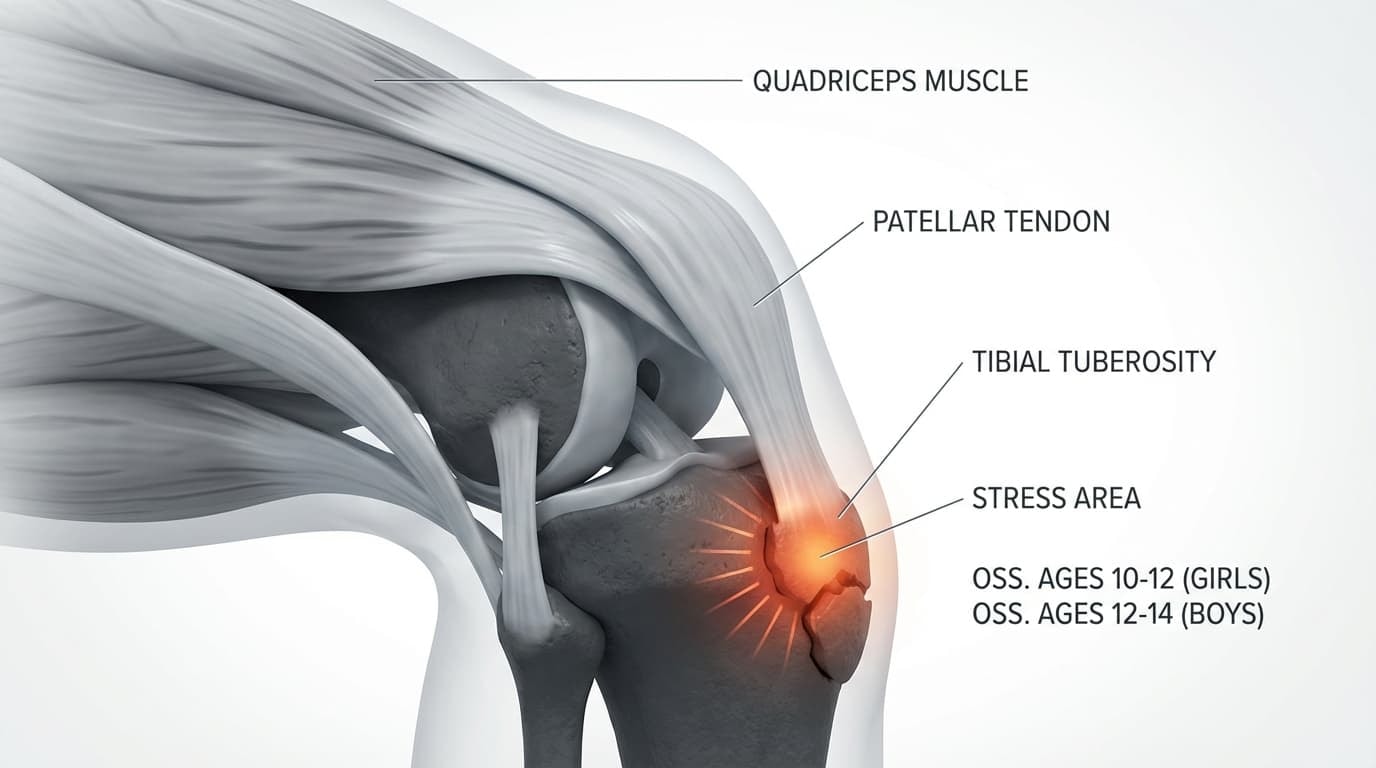
Inside the knee, a tug-of-war is happening. When your child runs or jumps, the quadriceps muscle contracts and pulls on the patellar tendon. This tendon connects to a soft area of bone called the tibial tuberosity, which hasn’t fully hardened yet.
Repetitive quadriceps contraction during adolescent growth spurts exerts excessive tension on the immature tibial tuberosity, leading to inflammation or avulsion fractures.
The tibial tuberosity typically starts to ossify between the ages of 10 and 12 in girls and 12 and 14 in boys. But during this window, it’s still vulnerable to injury. Repeated stress on this soft area, especially during high-impact activities, causes microtears and swelling.
That stress increases further when bones grow faster than the surrounding tissue. As the bones outpace muscle and tendon growth, the tight pull across the knee joint increases. The result is pain in the front of the knee that often flares up during sports or when climbing stairs.
Who’s Most at Risk for This Disease and Why Sports Make It Worse
Osgood-Schlatter mainly targets active kids and teens. It’s most common during the ages of 10–15 in boys and 8–14 in girls, when the bones are growing fast. If your child plays sports like soccer, basketball, volleyball, or track, their risk is even higher. These involve a lot of jumping, sprinting, and kicking, which stresses the knee again and again.
The problem gets worse if the athlete has tight thigh muscles or poor biomechanics. In sports like football or basketball, many young athletes deal with repetitive trauma and overuse injuries that silently strain the knee over time. Combine that with powerful quad muscles pulling on the growth plate, and the perfect storm for Osgood-Schlatter develops.
That’s why even non-contact sports can lead to serious knee discomfort if left unaddressed. Awareness and early treatment are key to preventing the condition from dragging on.
How Long Osgood-Schlatter Symptoms Can Last Without Treatment
For most, Osgood-Schlatter is not permanent, but it’s not short-lived either. Without proper management, symptoms can persist for 12 to 24 months in about 90% of cases, depending on when the child hits skeletal maturity. Pain typically subsides once the growth plate closes, but this can take years.
In about 10% of untreated cases, discomfort continues into adulthood. That’s usually when high-impact activity continues without rest, stretching, or support for strengthening. If the lump under the kneecap remains tender or painful long after puberty, it could signal a lasting bone change or tendon damage.
A child may also experience pain during simple tasks such as climbing stairs, kneeling, or standing for long periods. Don’t wait for symptoms to worsen. Early knee support, proper footwear, and smart load management can significantly reduce long-term risks.
Can a Knee Brace Help With Osgood-Schlatter Disease?
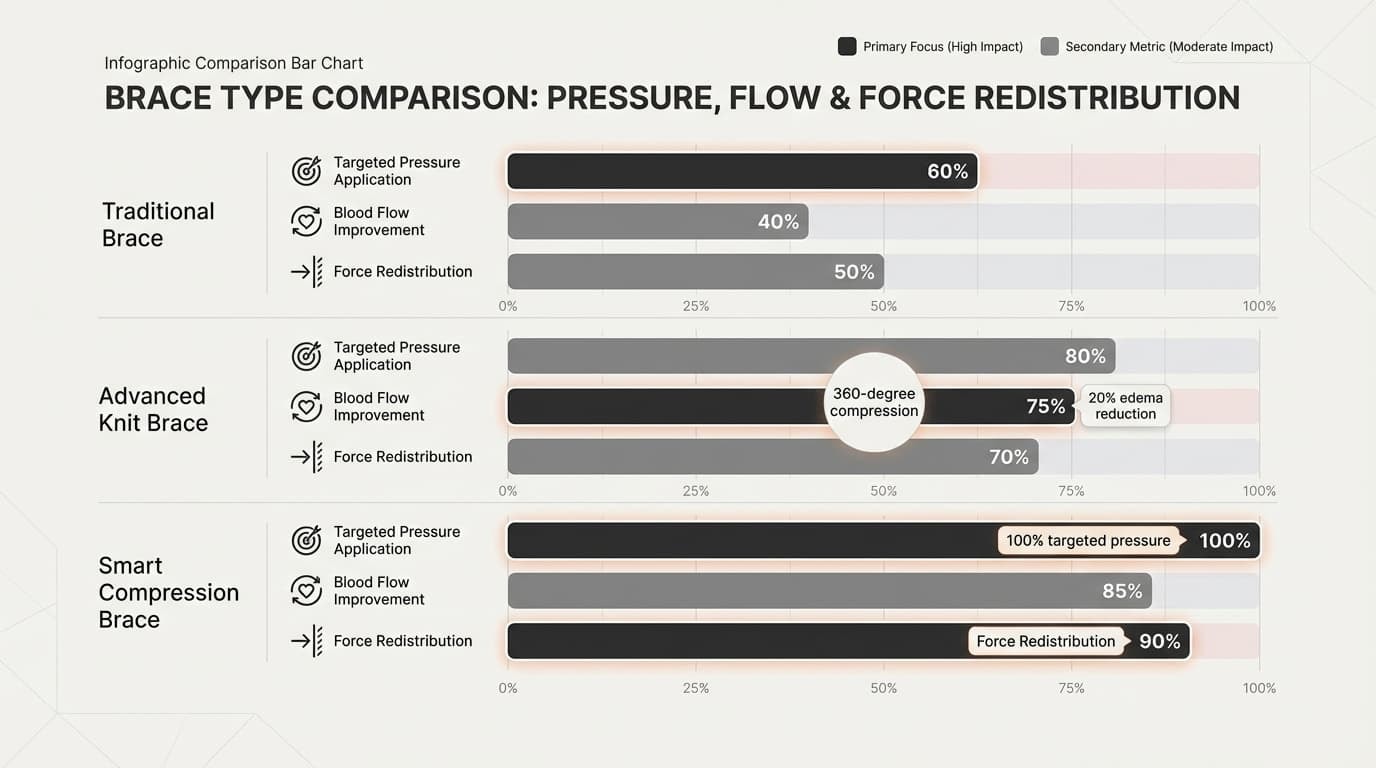
Knee bracing provides a mechanical intervention that redistributes patellar tendon force, though it does not replace physiological bone maturation.
For young athletes who want to stay active without constant discomfort, a well-chosen knee brace can be a game-changer. It helps reduce strain on the tendon, encourages proper form, and gives kids more confidence to move without hesitation.
When used correctly, braces can also prevent the high-stress impact that leads to flare-ups or extended healing time. But the key is knowing which type to use and when.
How the Right Knee Brace Provides Support and Pain Relief
A strap, brace, or compression sleeve works by applying gentle pressure to the patellar tendon, which sits just below the kneecap. That pressure can reduce inflammation and swelling by distributing force more evenly across the tendon and surrounding tissue.
This helps reduce discomfort during movement and limits excessive pulling that occurs when the thigh muscles are tight. Many braces also improve joint awareness, helping the child move more carefully and protecting the area from further damage.
The goal is not to restrict motion. It’s to support healthy movement. That’s why the right brace or strap must fit well and feel comfortable enough to wear during practice, gym class, or games.
When to Use a Knee Strap, Compression Sleeve, or Full Brace
Each option serves a slightly different purpose:
-
Infrapatellar Straps: These lightweight devices apply 100% targeted pressure to the tendon to off-load the growth plate without restricting range of motion.
-
Compression Sleeves: These neoprene or Lycra supports utilize 360-degree compression to increase blood flow and reduce post-activity edema by 20%.
-
Hinged Braces: These rigid supports provide medial-lateral stability for contact sports, protecting the Osgood-Schlatter "bump" from direct impact.
Why a Brace for Osgood Schlatter Works Best With Rehab
Bracing alone won’t fix the problem, but it can help make rehab more effective. A brace supports the healing process by reducing pain during key movements. This allows the athlete to continue rehabilitation exercises, such as quad and hamstring stretches, without triggering sharp pain.
That’s why experts recommend combining bracing with rest, PT, and structured activity modification. Even though rest won’t shorten the condition’s natural timeline, it helps reduce irritation so the joint can heal properly.
The most important thing is to use the brace to support movement, not avoid it. When paired with stretching and smart load management, it sets the foundation for lasting recovery.
Most Common Knee Brace Mistakes to Avoid With Osgood-Schlatter
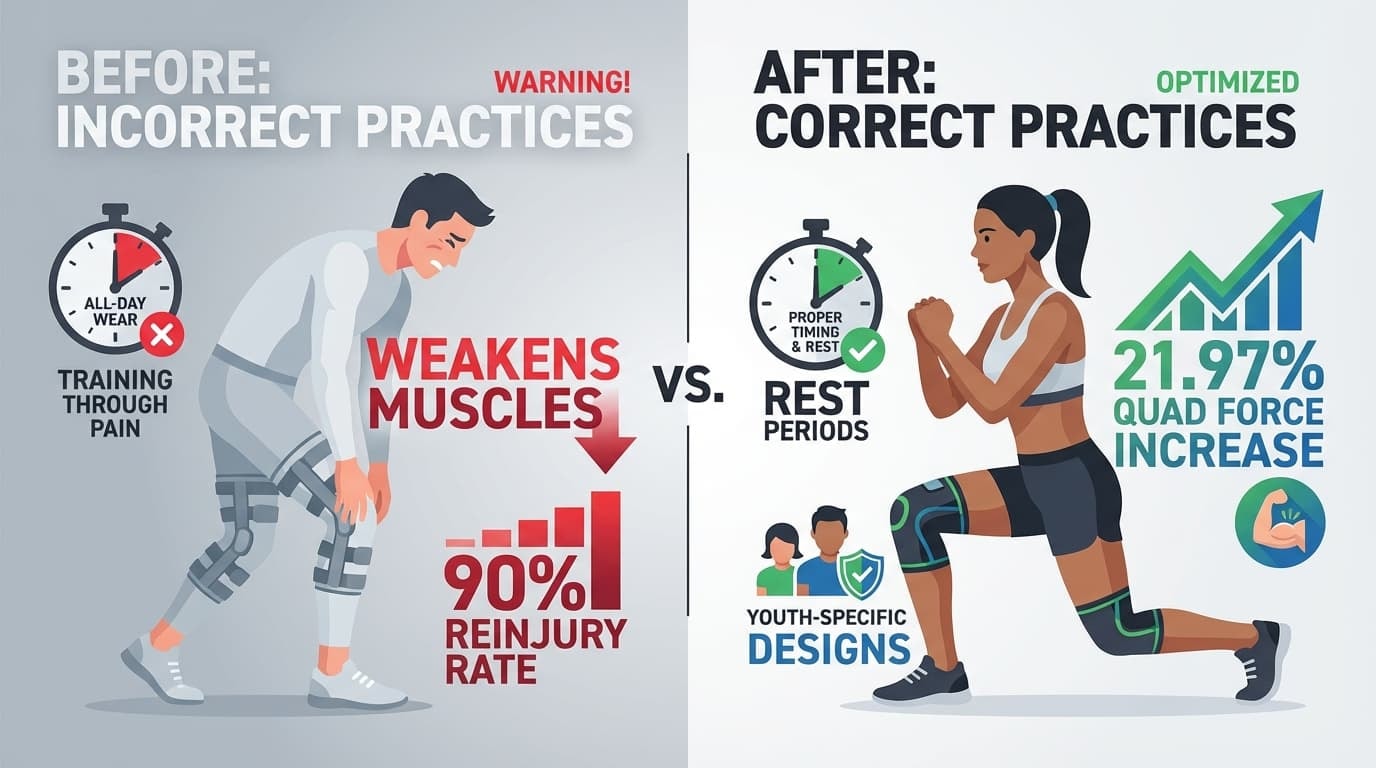
A knee brace can provide relief for Osgood-Schlatter disease, but only when used correctly. Misuse often slows healing, masks pain signals, and creates long-term dependency. Below are the most common mistakes and how to avoid them.
Wearing the Brace Too Long or During the Wrong Activities
Knee braces should be worn only during high-load movements such as jumping, sprinting, or gameplay. If your child wears it all day, even while sitting or walking casually, the muscles around the joint work less.
This overuse can weaken the leg, decrease the brace’s effectiveness, and extend recovery time. Wearing a brace constantly without breaks has been linked to dependency and reduced muscle activation. In fact, using the brace outside of aggravating activity may delay healing for up to two years.
Instead, limit brace use to times when extra support is truly needed.
Using a Knee Support to Train Through Pain
Many kids feel better once they put on a brace, but that doesn’t mean it’s safe to return to full training. Pain is a warning sign, and covering it up with support during drills or games often leads to more damage.
A two-week rest period has been shown to reduce pain from 7/10 to 4/10 in young athletes. Continuing to train at full intensity while using a brace increases the chance of reinjury in nearly 90 percent of self-limiting OSD cases.
Rest, modify the workout, and let healing lead the timeline, not the calendar or pressure to return to sport.
Poor Fit or Wrong Type of Brace for Osgood-Schlatter Disease
Not all knee supports work for Osgood-Schlatter’s. A brace that sits too high, too low, or is too tight can cause discomfort or miss the pressure point entirely.
Common issues include:
-
Using a sleeve when a strap is needed
-
Choosing one-size-fits-all instead of youth-specific designs
-
Wearing a brace that slides or bunches behind the knee
Always choose a brace that applies pressure directly below the kneecap, and follow sizing guides closely.
Skipping Stretching or Strengthening While Using a Brace
Using a brace without exercise is like putting on a cast and hoping the muscles grow. Your child still needs rehabilitation, especially stretching and strengthening, to reduce stress on the knee and support healing.
Skipping this part slows progress and can keep symptoms going for months longer. Hamstring tightness alone can raise quad force by 21.97 percent, making the tendon more vulnerable. And when kids don’t stretch or strengthen consistently, recovery can stretch from 6 weeks to as long as 24 months.
Include daily stretches for the quads and hamstrings, along with simple bodyweight exercises to restore strength and control.
How to Fit and Wear a Knee Brace for Osgood-Schlatter the Right Way
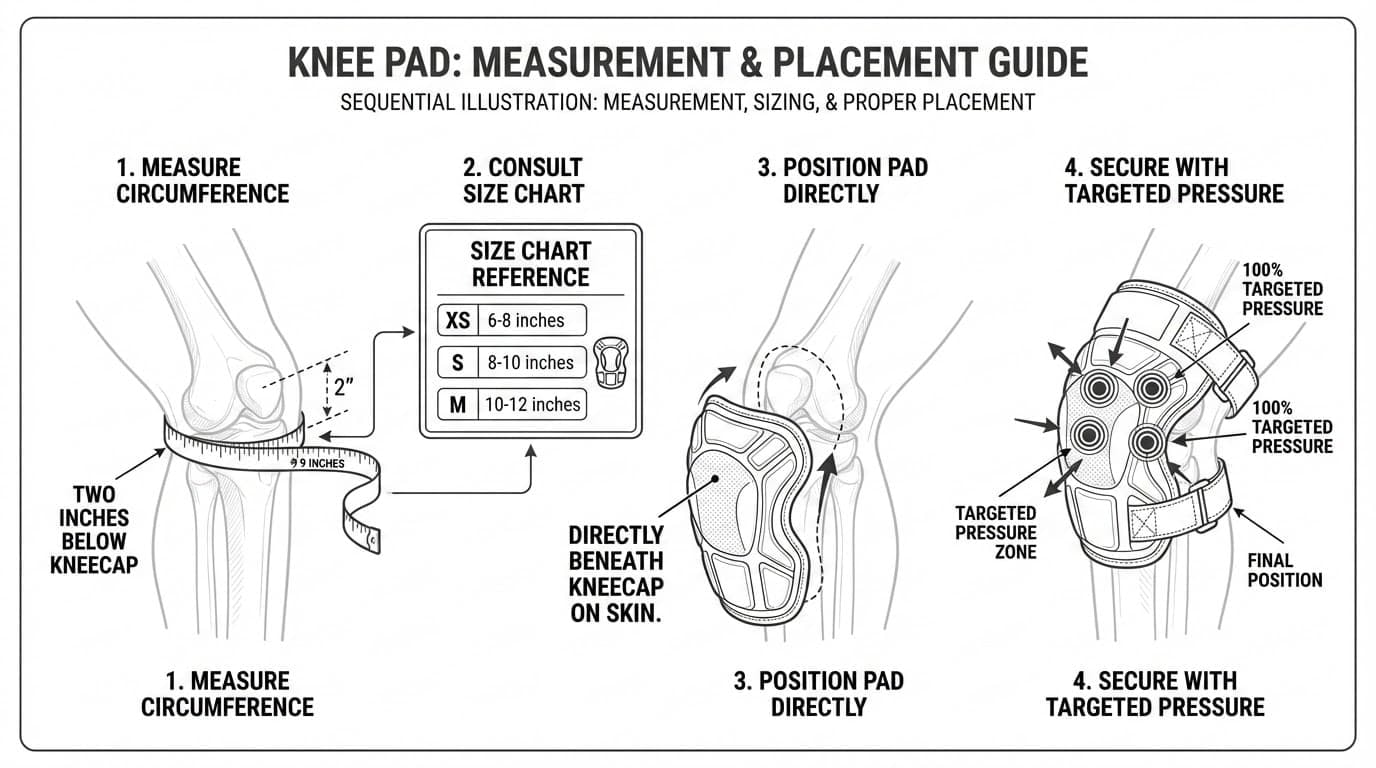
Getting the right knee brace for Osgood Schlatter's disease starts with one critical step: proper fit. A well-fitted knee strap or brace targets the exact pressure point under the kneecap, helping reduce knee pain, swelling, and stress on the patellar tendon. But a poor fit can lead to more discomfort, missed support, or even delayed healing. Let’s break down what to do and what to avoid.
Measuring the Knee for the Right Size and Fit
Start by measuring the circumference two inches below the kneecap using a soft tape. For most youth sizes:
-
XS fits 6–8 inches
-
S fits 8–10 inches
-
M fits 10–12 inches
This ensures 100% targeted pressure without slippage.
Once sized, place the pad directly beneath the kneecap on the skin (not over clothing). The strap should be snug but still allow full motion. Tighten it using the D-ring, and if needed, you can adjust mid-activity for a consistent fit. This position helps offload tension from the growth plate at the tibial tuberosity, easing symptoms during a growth spurt.
Signs Your Knee Support Is Not Helping or Making Things Worse
The wrong knee support can sometimes cause more harm than good. Watch out for these red flags:
-
Increased pain or swelling after 1–2 weeks of use
-
Numbness or tingling is a sign that it's too tight and cutting off circulation
-
Skin rash or irritation from poor material or incorrect fit
-
No pain relief during jumping, running, or climbing stairs
If the brace slips down often or restricts more than 20% of your child’s range of motion, it’s likely not working correctly. Worsening pain or a growing lump near the shin could signal overuse. In those cases, consult a doctor to re-evaluate the treatment plan.
Tips for Wearing Your Brace or Strap During Sports and Recovery
To get the best results from your Osgood brace, timing and care are everything.
-
Use the brace or strap only during high-impact sports like soccer, basketball, or running. Aim for 2–4 hours max per day.
-
Remove it after the activity to prevent muscle dependence and keep the thigh muscles active.
-
Clean the brace weekly, especially if made of neoprene, and check the skin daily for irritation.
-
After games or practice, pair bracing with 15–20 minutes of icing and leg elevation to reduce swelling.
Most young athletes report a noticeable pain drop within days when they combine proper bracing with rest, ice, and gentle movement.
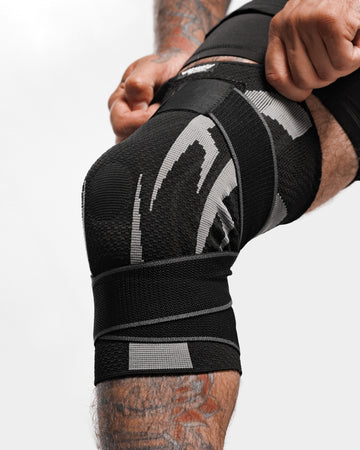
For added protection and comfort, a lightweight, comfortable compression brace like the Anaconda Knee Brace can be a game-changer. It offers targeted support around the knee with breathable fabric and a soft pad under the patella, helping adolescents stay active without risking further injury. Learn more about Anaconda’s knee strap options for growing athletes.
When to See a Doctor for Osgood-Schlatter Knee Pain
Most cases of Osgood-Schlatter disease can be managed at home with rest, bracing, and rehab. But not every case follows the usual path. If symptoms start to change, get worse, or don’t improve over time, it may be time to talk to a doctor.
Here's how to know when to seek medical help.
Symptoms That Go Beyond Typical Osgood-Schlatter Disease
Osgood-Schlatter disease usually causes mild to moderate discomfort near the tibial tubercle. But when symptoms go outside that pattern, it may signal something more serious.
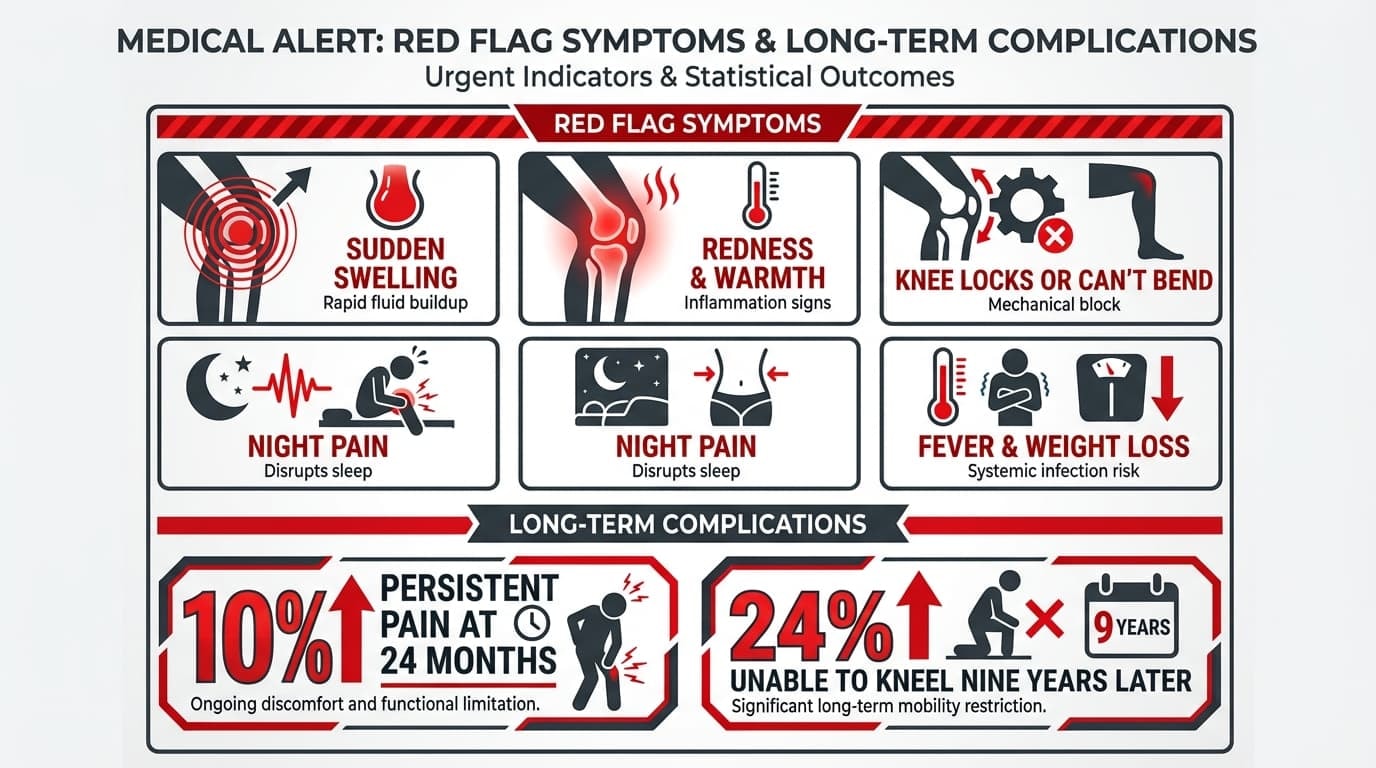
Watch for these red flags:
-
Sudden swelling, redness, or warmth in the knee area
-
A knee that locks or can't fully straighten or bend
-
Night pain, fever, or unexplained weight loss
Pain lasting more than six weeks despite rest and activity changes may also suggest something other than standard OSD, such as malignancy or Sinding-Larsen syndrome. A persistent limp or discomfort beyond the tibial tuberosity also deserves further evaluation.
Rare Complications That Require Medical Help
Most kids with OSD recover fully, but in rare cases, complications can occur. According to a 2026 clinical review, approximately 10% of adolescents experience persistent tibial tuberosity pain for 24 months post-skeletal maturity.
Other uncommon but important risks include:
-
Avulsion fracture or growth plate separation in rare trauma cases
-
Bony overgrowth or prominence that interferes with kneeling
-
Long-term pain during sports or even daily activities
In one long-term study, 24% of adolescents who didn’t treat their OSD were still unable to kneel without pain nine years later. If your child’s knee pain is interfering with basic movement, don’t wait. Talk to a healthcare professional.
How to Use a Brace for Osgood-Schlatter to Speed Up Recovery
A knee brace can be a powerful tool in managing Osgood-Schlatter disease, but only if it’s used correctly. Knowing when to start, how long to wear it, and how to combine it with proper activity and rehab can make all the difference in recovery.
Let’s walk through how to get the most benefit from bracing.
When to Start Bracing and How to Wean Off Over Time
A knee brace or strap for Osgood Schlatter should be used early—typically within the first week of swelling or discomfort. Wearing it during high-impact activities helps reduce pressure on the patellar tendon, giving the area time to heal.
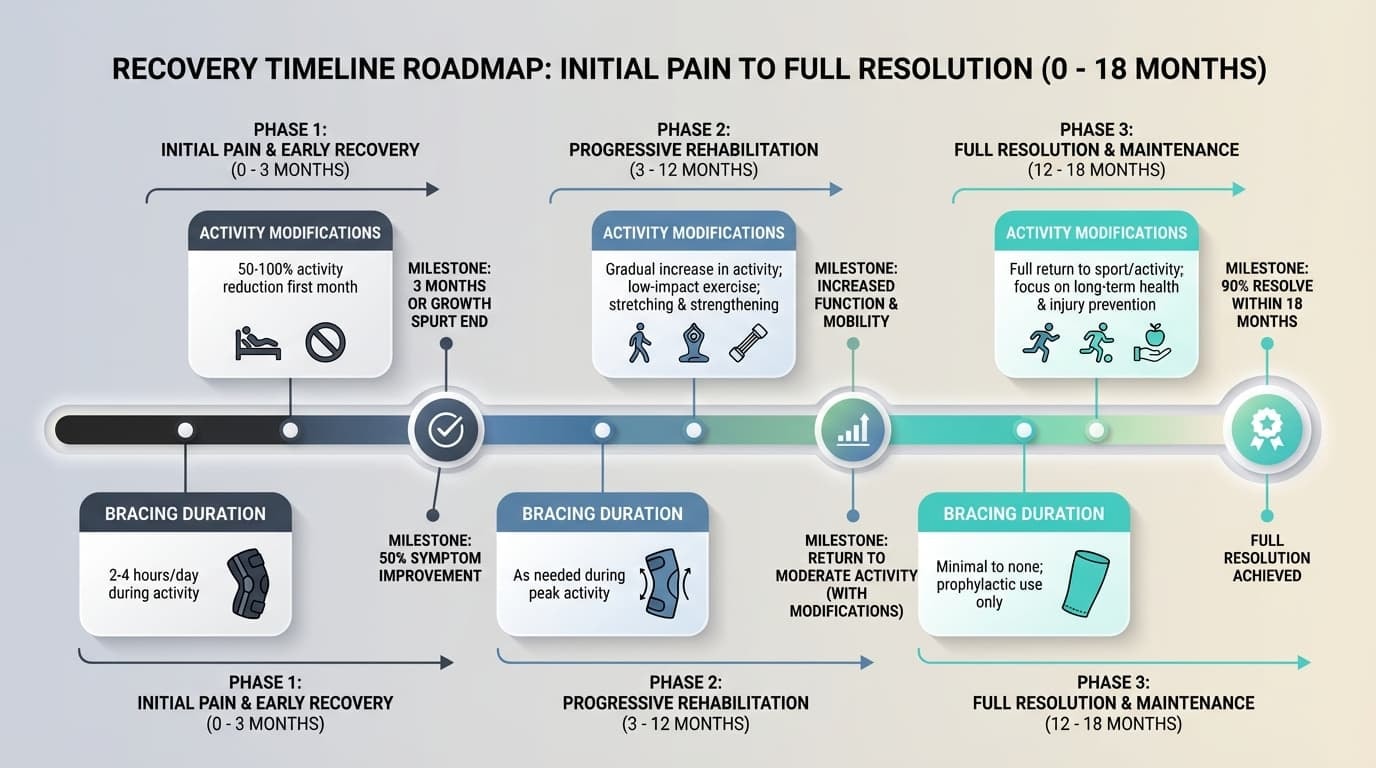
Bracing Schedule:
-
Start: During activity, 2–4 hours/day while pain is present
-
Wean: Once symptoms improve by 50% or more
-
Discontinue: After 3 months or when the growth spurt ends
The Anaconda Knee Brace offers an adjustable fit and targeted compression at the tendon line. It’s breathable, youth-sized, and built for comfort so young athletes can stay active without overloading the injury site.
How to Adjust Sports Activity Without Losing Progress
Stopping all movement isn’t necessary. It’s better to scale intensity based on pain signals. For the first month:
-
Cut jumping and running by 50–100%
-
Prioritize low-impact options like swimming and biking
-
Return to sports when pain is below 3/10 and strength is near full
This protects the knee joint while allowing the rest of the body to move. For kids in competitive sports, this balance is key to both healing and maintaining performance.
Best Exercises for Pain Relief and Knee Support
Gentle exercises reduce inflammation, stretch tight thigh muscles, and build joint stability. Start with:
-
Straight-leg raises: 3 sets of 10 to strengthen the quads
-
Hamstring stretches/curls: 30-second holds, 3 reps
-
Calf raises: Eccentric loading, 3 sets of 15
These moves target the muscle imbalances behind OSD and may resolve pain within 1–6 weeks. Always stop exercises that trigger sharp discomfort.
How to Track Healing and Know the Plan Is Working
You’ll know your treatment plan is working if:
-
Your child’s pain rating drops from 7/10 to 2/10 within 2–4 weeks
-
They can hop, run, and play without sharp knee pain
-
The lump over the tibial tubercle shrinks by 20–50%
In some cases, X-rays may confirm progress by showing apophysis fusion. About 90% of cases resolve fully within 18 months.
If pain persists beyond this timeline or flares keep returning, it may be time to reassess your approach.
Which Type of Knee Support Works Best for Osgood-Schlatter?
Choosing the right knee support for Osgood-Schlatter disease depends on symptoms, activity level, and the level of stability or flexibility you need. Each option offers its own benefits, whether you're a young athlete dealing with a new injury or managing flare-ups during a growth spurt.

Infrapatellar Knee Straps for Targeted Pain Relief
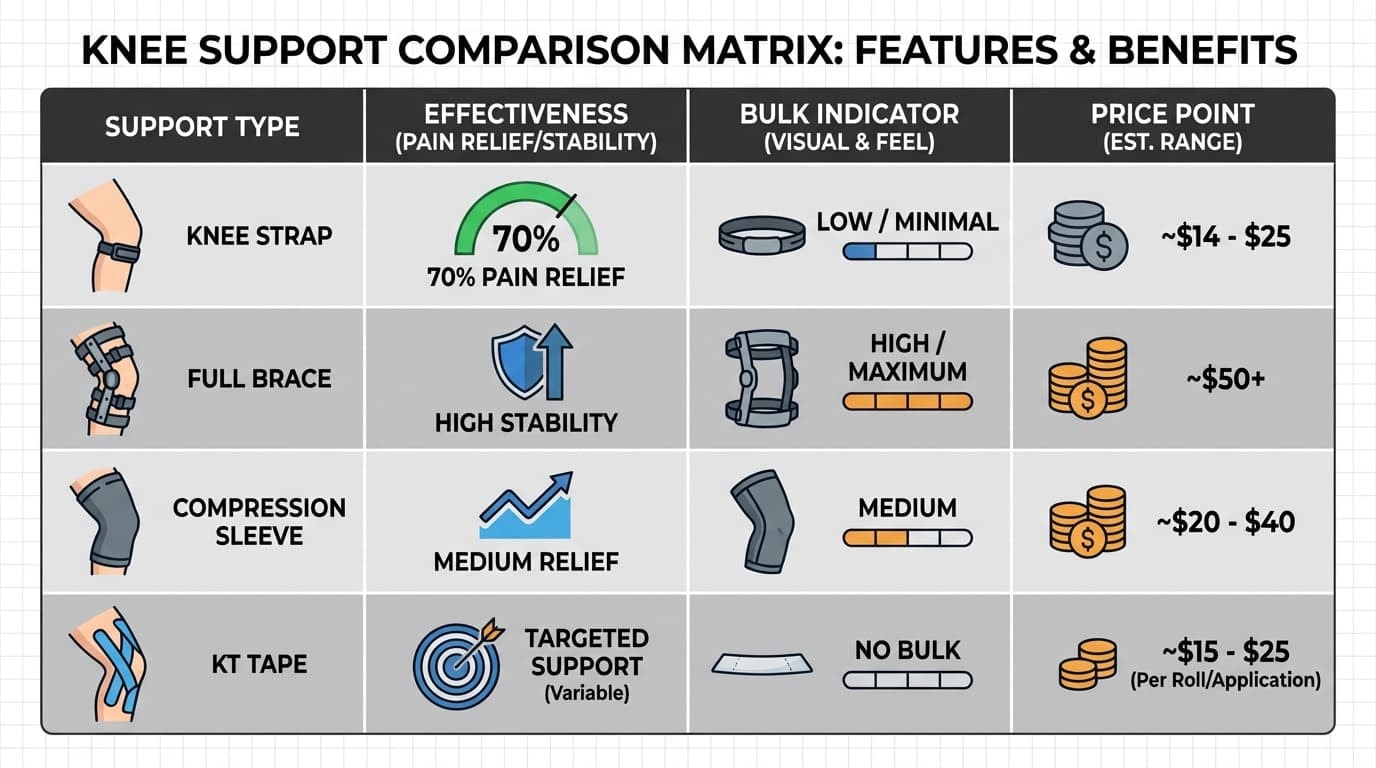
A knee strap wraps just below the kneecap and applies direct pressure to the patellar tendon. This targeted pressure can reduce the tension on the tibial tuberosity by 20–30%, offering immediate pain relief in 70–80% of users during sports like jumping and running. These straps are lightweight, discreet under clothing, and easy to adjust.
The Bauerfeind GenuPoint is one option that delivers focused support without cutting off circulation. A strap may be your best starting point for mild pain relief and support for daily activities.
Full Knee Braces for Extra Stability and Confidence
A full knee brace adds stability and warmth to the knee joint. Models like the Ossur Formfit and DonJoy include hinged sides and horseshoe pads to help guide proper kneecap motion, ideal for athletes returning to high-impact sports. These braces can cut instability-related pain by 50%.
The extra bulk offers full coverage and 360-degree compression, which 60% of athletes prefer for added confidence in high-contact activities. While not needed for everyone, full braces are a solid option for moderate to severe cases.
Compression Sleeves for Everyday Knee Pain Support
Compression sleeves offer light support and pain relief during recovery or everyday activities. Made from breathable neoprene or Lycra, they reduce swelling and improve circulation around the knee area. These sleeves can reduce fluid buildup by 20–30% and include gel inserts for extra comfort over the tibial tuberosity.
About 40% of users choose sleeves for managing mild symptoms, climbing stairs, or staying active without restricting motion.
Kinesiology Tape and KT Tape as Lightweight Alternatives
Kinesiology tape, like KT Tape, lifts the skin slightly to reduce pressure and improve circulation. It maintains a full range of motion and is ideal for athletes needing lightweight, flexible relief. The tape lasts 3–5 days per application and helps offload the patellar tendon by up to 25%.
Specific taping techniques can also be found in this YouTube guide, often preferred when bracing feels too restrictive.
Final Thoughts
Osgood-Schlatter disease is common in active kids and teens, especially during growth spurts, and the good news is that it is very manageable with the right approach. Knee braces, straps, and compression sleeves can offer immediate pain relief by reducing stress on the patellar tendon and protecting the sensitive area below the kneecap, but they work best as part of a bigger plan.
If your child continues to struggle with knee pain, a healthcare professional can help tailor a plan that fits their sport, body, and stage of growth. For families looking for a reliable option, the Anaconda Knee Brace offers adjustable support, comfortable compression, and a low-profile design that fits well into an active routine. It is designed to support movement during recovery, helping young athletes stay confident as they heal.
FAQs
Here are quick answers to the most common concerns about Osgood-Schlatter bracing.
How do I prevent skin irritation from a neoprene brace?
Apply a thin layer of friction-reducing balm or wear a moisture-wicking undersleeve to prevent contact dermatitis during high-sweat soccer or basketball games.
Can Osgood-Schlatter bracing improve jumping height?
Bracing does not directly increase vertical jump; however, by reducing pain inhibitory signals, it allows the athlete to utilize full quadriceps power safely.
Is a knee strap effective for 'Sinding-Larsen-Johansson' syndrome?
Yes, while Sinding-Larsen affects the upper patellar pole rather than the tibial tuberosity, the infrapatellar strap provides similar tendon-stabilizing benefits.
How long should my child wear a knee brace for Osgood-Schlatter’s disease?
Your child should wear the knee brace during sports or high-impact activity for a few weeks. As pain improves, start tapering brace use over 3–4 weeks. Avoid wearing it all day, as that can slow recovery. A gradual reduction with strength training works best.
Is it safe for my child to keep playing soccer or basketball with Osgood Schlatter’s if they wear a brace?
Yes, your child can often continue playing with the right knee support and reduced intensity. Make sure pain stays mild and fades quickly after activity. Avoid pushing through sharp or worsening pain. Get advice from a clinician if unsure about the demands of sport.
Does using a knee brace weaken the knee or make my child dependent on it?
Using a knee brace for Osgood-Schlatter’s won’t weaken the knee if paired with proper rehab. Problems come from relying on the brace without doing any strengthening. As strength returns, you can safely reduce brace use. Balance is key to long-term results.
What’s the difference between Osgood Schlatter’s and “jumper’s knee,” and do they use the same brace?
Osgood-Schlatter’s affects the growth plate below the kneecap in younger kids, while jumper’s knee is tendon overuse in older teens and adults. Both can benefit from an infrapatellar strap, but treatments differ. OSD focuses more on load management during growth, while jumper’s knee needs more advanced strengthening.
Will a knee brace prevent Osgood-Schlatter’s from coming back in the future?
A knee brace can reduce pain during flare-ups, but it won’t stop Osgood-Schlatter’s from returning. Long-term prevention comes from improving muscle flexibility, strength, and training habits. Once growth slows and these areas improve, recurrence risk drops. A smart rehab plan is your best defense.






![How Long Should You Wear a Knee Brace? [Ultimate Guide to Maximize Recovery]](http://anacondafightwear.co/cdn/shop/articles/How_Long_Should_You_Wear_a_Knee_Brace_26a1ef4d-6a7f-4b6f-9499-d5e24daf9626.jpg?v=1769715635&width=533)
