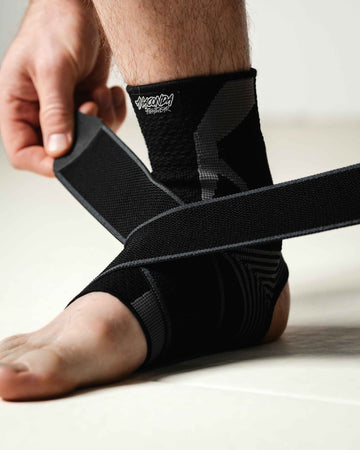
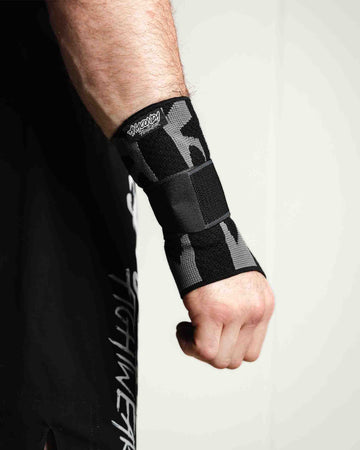
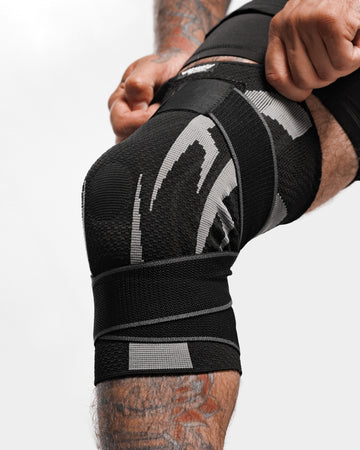
A knee brace can significantly reduce sciatica-related knee pain by stabilizing the joint and correcting gait compensations, though it does not treat the root spinal nerve compression.
While the sciatic nerve originates in the lower back, compression at the L4-S1 vertebrae often creates 'referred pain' and muscle weakness in the knee, making bracing an effective tool for symptom management and fall prevention during recovery.
A knee brace for sciatica can support the knee joint, reduce strain from limping, and ease pressure during movement. Still, it won’t fix the root issue, which is often sciatic nerve compression in the lower back.
Sciatic pain affects 10 to 40 percent of people over their lifetime, with an annual incidence of 1 to 5 percent. It accounts for 5 to 10 percent of low back pain cases, and knee braces are often used to manage related discomfort.
In this guide, you'll learn when a brace for sciatica helps, which types are most effective, and what else to do to relieve pain and move comfortably.
Key Takeaways
-
A knee brace can sometimes ease sciatica-related knee discomfort by providing support, stability, and compression, but it cannot fix the spinal nerve compression that usually causes sciatica in the first place.
-
Knee braces work best as a symptom-management tool rather than a cure; they may help if you have knee weakness, altered gait from limping, or co-existing knee arthritis alongside sciatica.
-
True long-term relief typically requires treating the source of the problem in your lower back or pelvis through physical therapy, posture changes, or medical intervention.
-
Over-reliance on a brace without accompanying strengthening exercises may lead to muscle deconditioning over time.
-
See a doctor urgently if you experience new leg weakness, foot drop, loss of bladder or bowel control, or numbness in the groin area; these are red flags that require immediate evaluation.
What Is Sciatica and Why Does It Cause Knee Pain?
Sciatica refers to radiating pain that travels along the sciatic nerve path from the lower back, through the hips and buttocks, and down one leg. It typically occurs when the nerve roots from L4 to S3 become irritated or compressed.
Unlike general back pain, sciatica often causes burning, tingling, numbness, or leg weakness that worsens with sitting, bending, or coughing. In many cases, the knee pain people feel is not due to a knee injury but from nerve signals misdirected from the spine.
How Sciatica Sends Pain to the Knee (Referred Pain Explained)
The sciatic nerve branches supply the posterior knee structures. Consequently, compression of the L4 or L5 nerve roots transmits sharp pain signals directly to the thigh or posterior knee, creating false sensations of joint injury.
Medical professionals define this phenomenon as referred pain, a condition affecting 20 to 30 percent of sciatica patients where the brain misinterprets spinal nerve compression as localized knee trauma. Even absent structural knee damage, this neural signal dysfunction necessitates support to prevent secondary soft tissue strain.
Sciatica presents in the knee through distinct neurological symptoms:
-
Phantom Instability: A sensation that the knee is 'giving way' or buckling due to quadriceps inhibition.
-
Neural Zaps: Sharp, electric-shock sensations running along the peroneal nerve path (side of the knee).
-
Dull Throb: A persistent ache in the popliteal fossa (back of the knee) mimicking a hamstring strain.
Even if there’s no damage to the joint, the altered movement caused by nerve dysfunction can strain surrounding tissues. A brace for sciatica can help relieve pain and offer light knee support, especially during walking or standing. When used with physical therapy, it may reduce stress on affected structures and improve confidence in movement.
Key Causes of Sciatic Nerve Compression
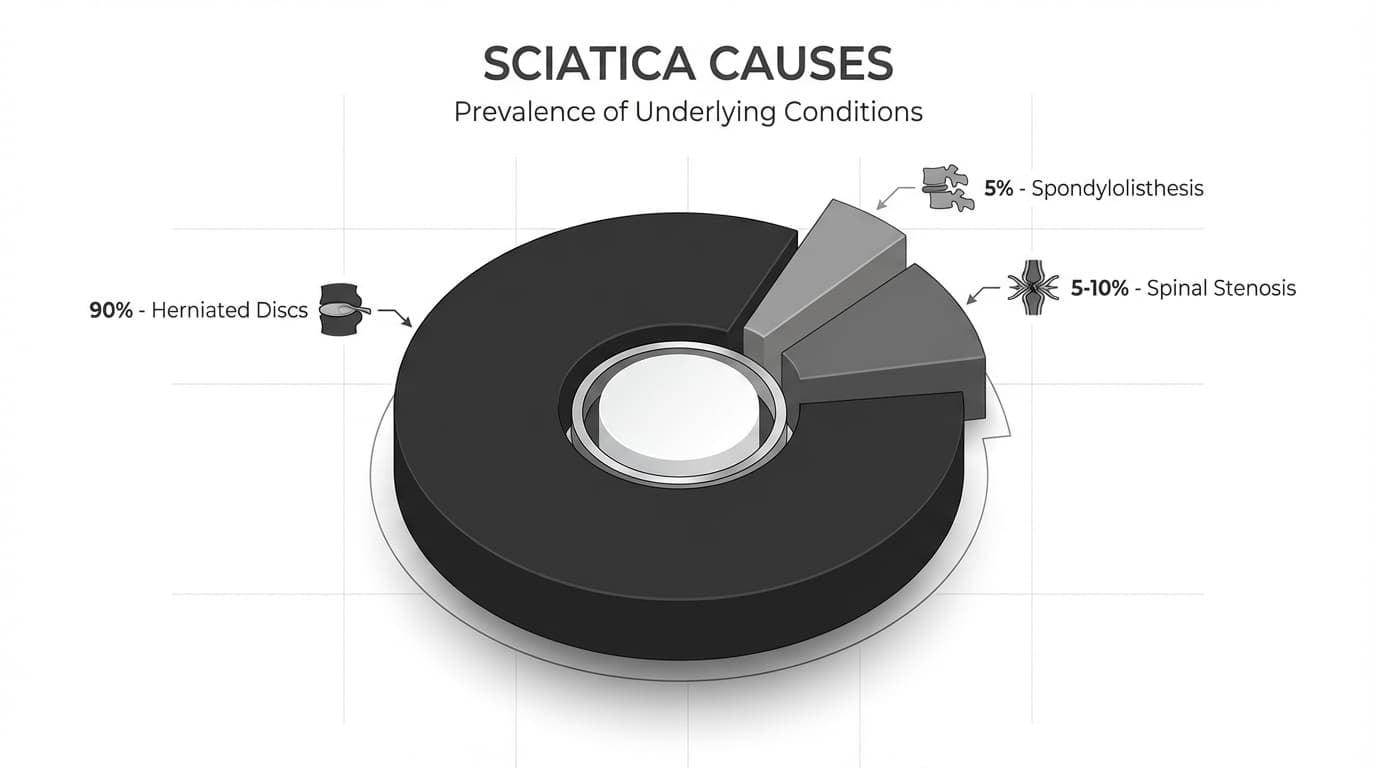
Several conditions can compress the nerve roots that form the sciatic nerve, leading to sciatic pain that travels down to the knee:
-
According to Mayo Clinic data (2024), herniated discs account for 90 percent of sciatica cases, specifically pressing on the L4–S1 roots that govern lower limb sensation.
-
Spinal stenosis is a narrowing of the spinal canal and affects 5 to 10 percent of people, especially older adults.
-
Degenerative disc disease reduces the space around nerve roots and is very common with age.
-
Spondylolisthesis causes vertebrae to slip and compress nerves in about 5 percent of cases.
-
Piriformis syndrome occurs when the piriformis muscle tightens or spasms, trapping the sciatic nerve.
Each of these issues affects how nerve signals travel through the body and can lead to radiating leg pain or instability.
While these conditions must be addressed at the root, using a well-fitted brace for sciatica can help support the leg during recovery.
To counteract this instability, adjustable compression supports like the Anaconda Knee Brace provide proprioceptive feedback—helping the brain track leg position—without restricting the range of motion needed for rehabilitation exercises.
Why Sciatica Causes Knee Instability and Weakness
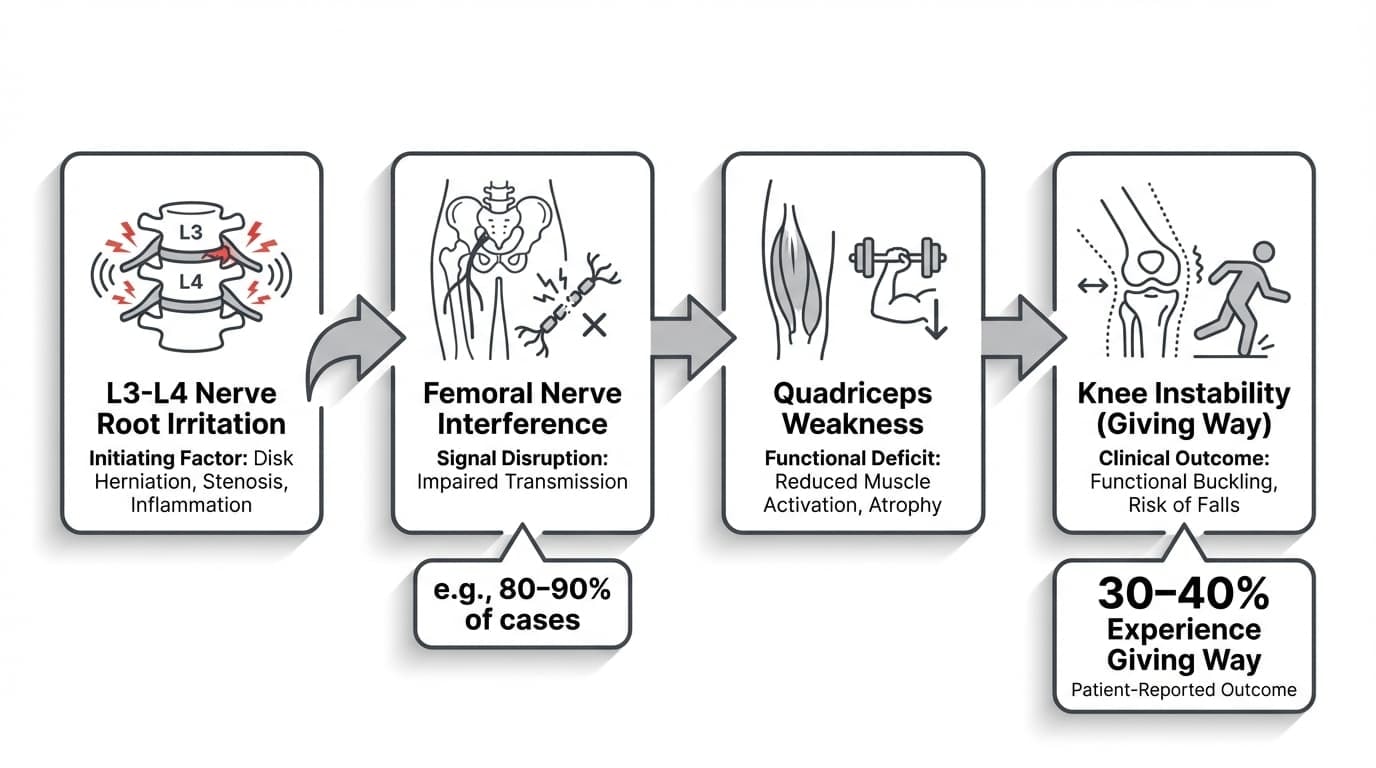
Knee instability can be one of the most confusing symptoms of sciatica. One minute you're fine, the next your knee feels shaky, unsteady, or like it might give out. The reason lies in how sciatica originates higher up, not in the knee itself, but in your lumbar region, where important nerve roots control leg function.
When those nerve signals are disrupted, your muscles don’t respond the way they should. That’s where weakness and instability start to show.
Nerve Effects on Quadriceps and Patellar Control
The sciatic nerve doesn't just send pain signals down your leg; it also affects how well your muscles fire. When the L3-L4 nerve roots are irritated, they can interfere with the femoral nerve, which weakens the quadriceps and reduces your patellar reflex.
This makes it harder to:
-
Extend your leg fully
-
Control the knee joint
-
Stay balanced while walking or climbing stairs
It’s not just weakness; it’s miscommunication between your brain and body. Your muscles don’t get the full message from your spine, which can lead to knee buckling, loss of balance, and discomfort during daily tasks.
Studies show 30–40% of people with sciatica experience some form of knee giving way or trouble bearing weight.
A right brace for sciatica may help provide support, especially when paired with core muscle strengthening and targeted movement. For example, the Anaconda Knee Brace offers adjustable pressure pad support and breathable stability that helps reduce muscle compensation and build walking confidence during flare-ups.
Gait Changes and Extra Stress on the Knee Joint
Sciatica often changes how you walk. To avoid radiating pain, people may start limping, shorten their stride, or shift weight off one lower limb. This antalgic gait increases pressure on the medial knee compartment by 15–25%, which can lead to more joint stress and even early degeneration.
Plus, tight hamstrings, which are common in sciatica, pull on your pelvis and alter the curvature of your lumbar spine. This altered posture redistributes tension through the knee and contributes to pain in 34% of patients with chronic lower back pain.
If this goes untreated, you also risk muscle atrophy. In as little as 3 months, 10–20% of quadriceps strength can be lost, and if the nerve remains compressed for more than a year, the damage may become permanent.
Can a Knee Brace Help with Sciatica Symptoms?
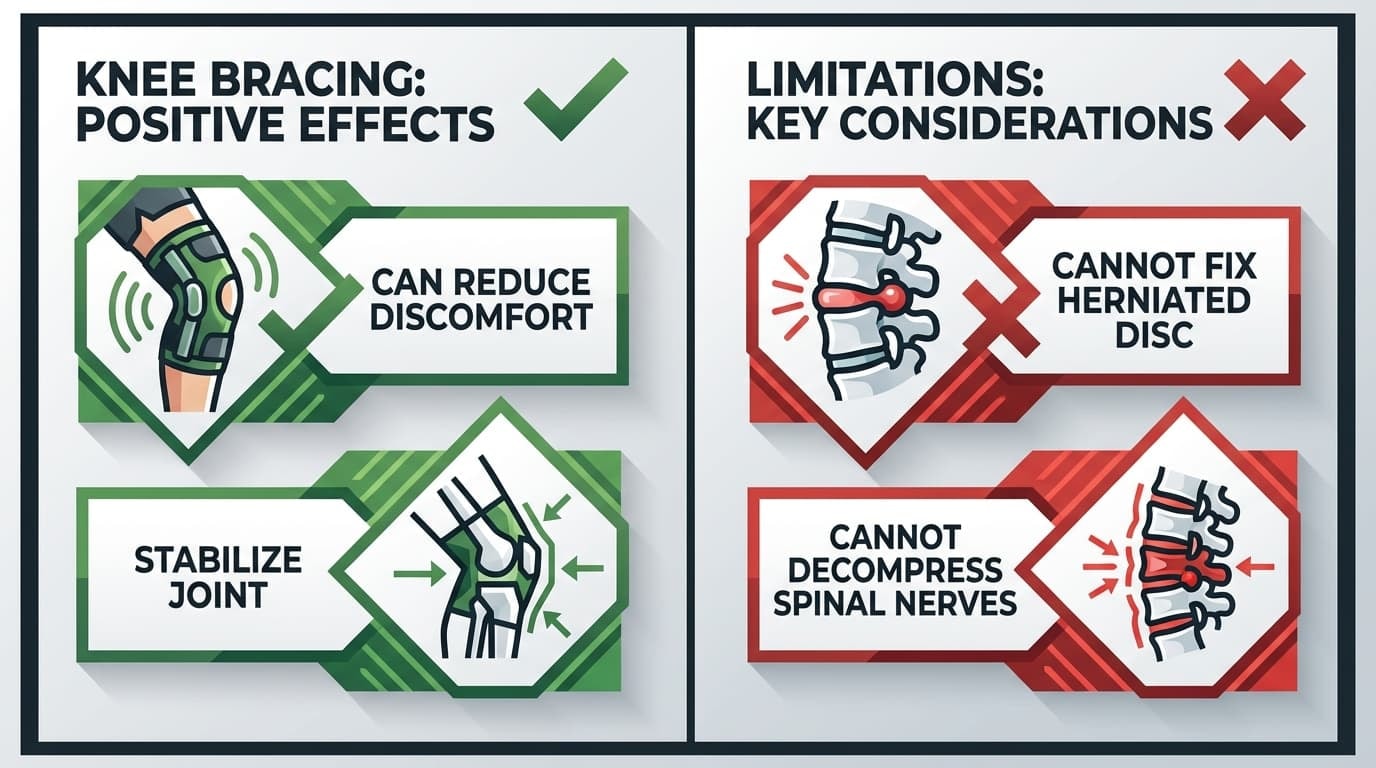
Knee feeling weak or wobbly because of sciatica? It’s a common problem. While the pain starts in your lower back, it often spreads to your knee. That’s where the right kind of brace can offer support.
What a Knee Brace Can and Can’t Fix
A knee brace can help reduce discomfort, stabilize the joint, and ease irritation caused by gait changes. Clinical evidence shows that bracing can significantly lower pain scores within the first week of use during activities.
However, a brace will not fix the root issue if your symptoms are caused by a herniated disc or spinal narrowing. It cannot decompress nerves in the spine. The brace supports only the knee, not the spine. Overuse without strengthening can also lead to weaker muscles and long-term dependence.
Who Might Benefit Most from Knee Support
You might benefit from knee support if:
-
You have knee buckling or instability while walking
-
You experience mild to moderate radiating pain near the knee
-
You need support during recovery or activity
If you want a brace that balances comfort, flexibility, and support, the Anaconda Knee Brace is a strong choice. It was designed for daily use and can help reduce strain on the knee from sciatica-related gait changes.
Which Knee Brace Works Best for Sciatica-Related Pain?
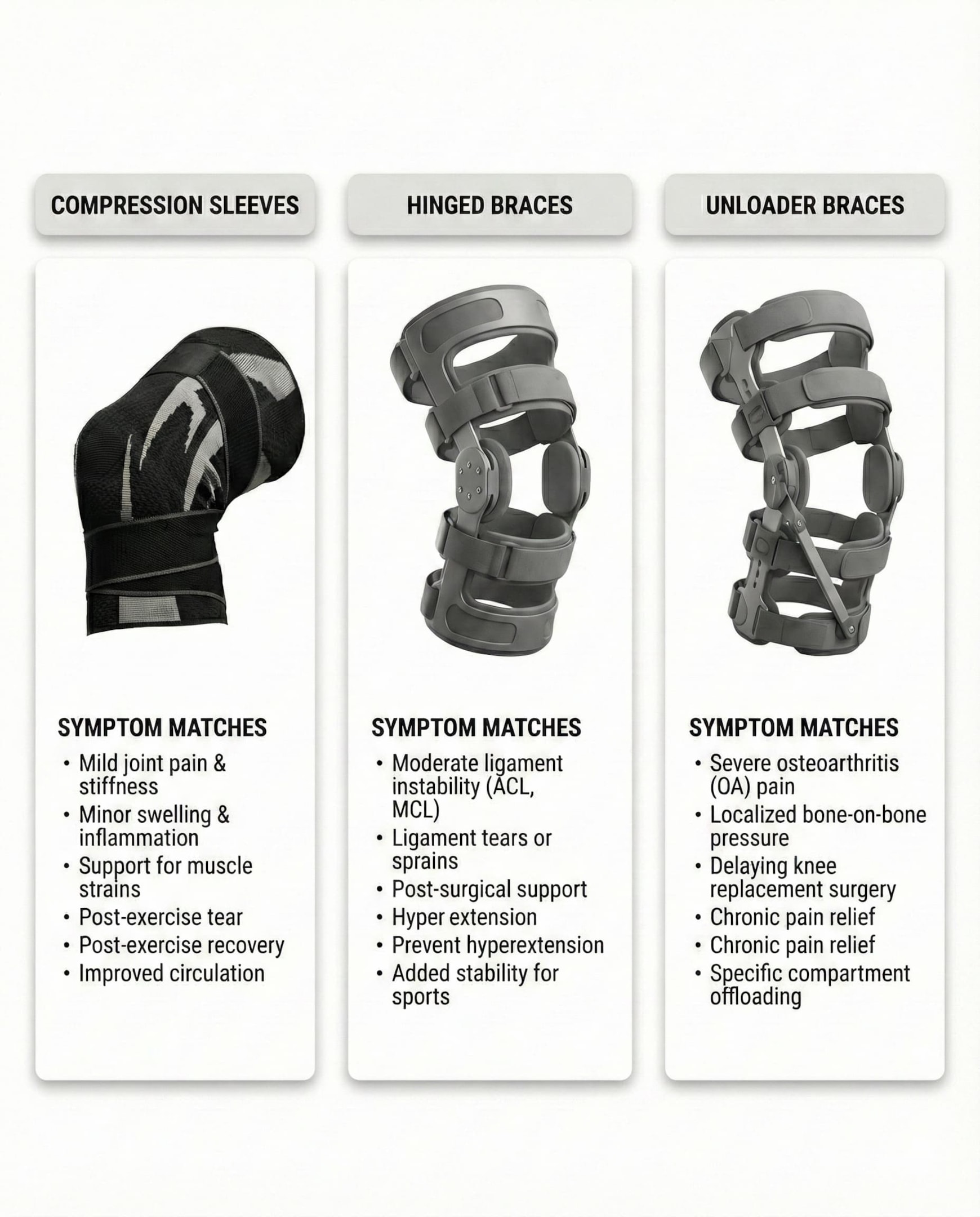
Selecting the correct brace depends on whether your primary symptom is pain (Compression) or instability (Hinged). Whether you're dealing with light discomfort, muscle weakness, or a mix of arthritis and nerve irritation, there’s a specific type of brace that may help.
Let’s break down your best options so you can find a supportive solution that fits your daily needs.
Compression Sleeves for Mild Symptoms
If your knee feels sore, achy, or slightly unstable, a compression sleeve can be a simple, effective option. These sleeves are typically made of stretchy neoprene or breathable knit fabrics that slide over your knee joint with ease. They provide consistent pressure, which helps stimulate circulation and gently reduce inflammation caused by nerve irritation.
Compression sleeves work well when:
-
You have mild sciatica symptoms affecting your knee
-
You need light knee support for walking, working, or standing
-
You want something discreet to wear under clothing during daily activities
If you're looking for a reliable, comfortable sleeve, consider the Anaconda Knee Brace, which provides gentle compression without restricting movement, making it ideal for everyday use.
Hinged Braces for Knee Buckling
If your knee feels like it might give out when you walk or shift your weight, a hinged brace could be exactly what you need. This type of brace provides lateral and anterior-posterior support, helping prevent your knee from collapsing during motion. It’s especially useful if you’ve been experiencing knee instability due to sciatica-related quadriceps weakness or altered walking patterns.
Choose a hinged brace when:
-
You feel sudden knee buckling or loss of control
-
Your leg feels weak when climbing stairs or standing from a chair
-
You need more structure than a compression sleeve can provide
Hinged braces like the M.3 OA with Physioglide support natural knee movement while redistributing pressure across the joint. This makes walking feel smoother and more secure. The side hinges act as external stabilizers for the knee, giving your muscles time to strengthen without overstraining.
Unloader Braces for Combined Arthritis and Sciatica
If you have both knee arthritis and sciatica, walking can feel extra painful due to pressure from both nerve and joint issues. An unloader brace is designed specifically to reduce stress in one part of your knee joint, typically the inner (medial) or outer (lateral) compartment. This helps ease joint pressure while giving your nerve-irritated leg a break.
Unloader braces are ideal when:
-
You’ve been diagnosed with unilateral knee arthritis and sciatica
-
You feel localized joint pain along with radiating pain in your leg
-
Your symptoms interfere with walking or daily activities
These braces typically include adjustable load systems, flex-bar technology, and soft-grip padding for all-day comfort. They work by shifting your body weight away from the worn part of your joint, reducing pain while you move. Braces like the M.4s OA are often prescribed for moderate to severe cases and may require custom fitting to ensure effectiveness.
While they may feel bulky at first, many users report noticeable pain relief and improved confidence when walking with walking when using these braces.
Sciatica Leg Wraps and Nerve Pads
You may have seen leg wraps or pads marketed as “sciatica wraps” that apply pressure just below the knee or on the side of the calf. These devices are based on the idea of targeting pressure points along the sciatic nerve pathway to reduce pain signals and improve comfort.
Do they work? Sort of.
Here’s what we know:
-
Some people report short-term relief, especially during walking or sitting
-
These wraps may help reduce nerve tension by shifting leg position slightly
-
However, there is limited clinical evidence supporting long-term results
One study found a temporary drop in reported pain levels with targeted leg wraps, but noted the benefits were modest and not well supported by large trials. So while these wraps may feel good during a flare-up, they should be seen as optional tools, not replacements for physical therapy, movement, or comprehensive care.
How to Use a Knee Brace Safely and Effectively
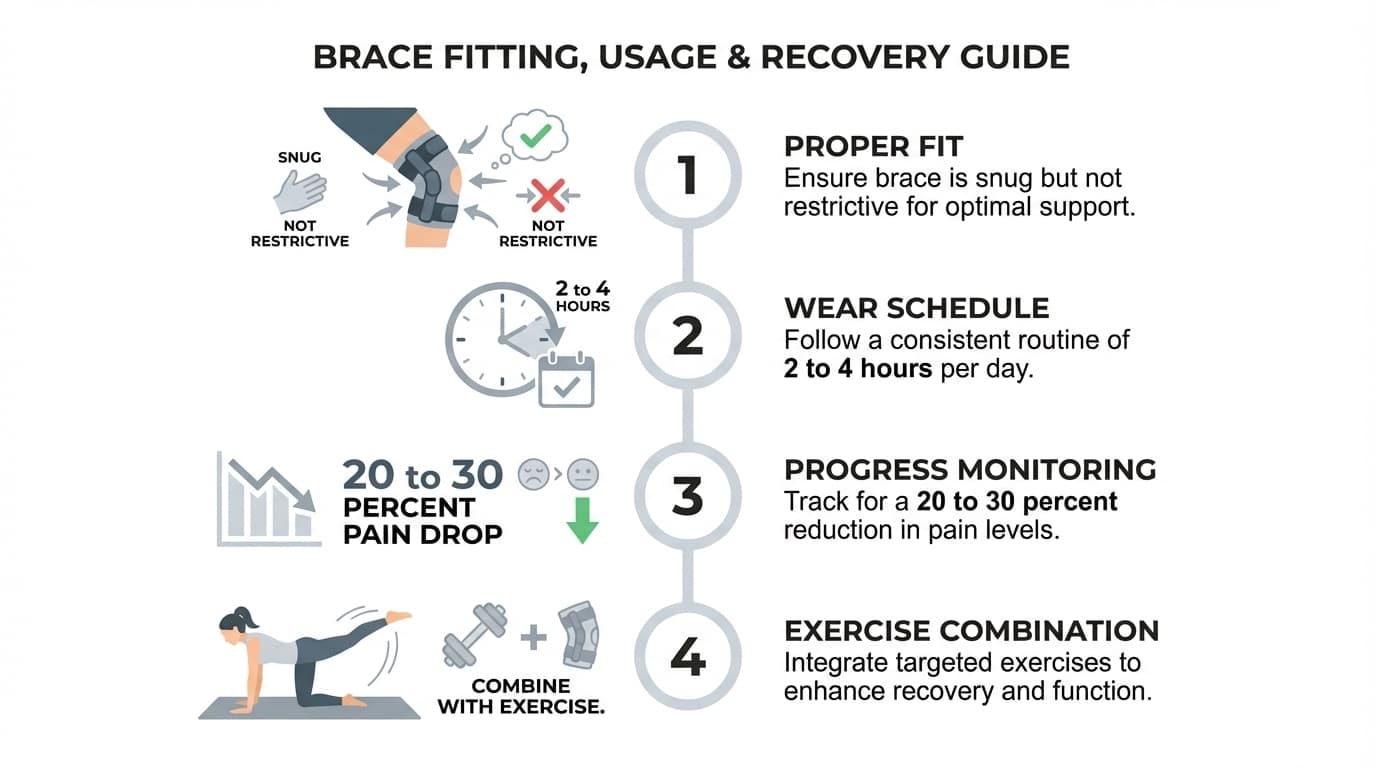
A knee brace can be a helpful tool for managing sciatica symptoms, but only when used correctly. Wearing the wrong brace, wearing it too long, or relying on it without movement can slow recovery rather than help it. Proper fit, timing, and combination with exercise all matter.
Fit, Wear Time, and Signs It’s Working
Fit is the foundation of effectiveness. A brace that is too loose will slide and offer no support. A brace that is too tight can increase irritation and reduce circulation.
Most knee braces designed for sciatica should sit just below the kneecap, with the pressure pad placed along the outer edge of the calf. This position helps influence leg alignment and reduce tension traveling along the sciatic nerve.
Key fit and wear guidelines:
-
The brace should feel snug but not restrictive
-
You should be able to bend the knee joint fully without pinching
-
Skin color and temperature below the brace should remain normal
Start by wearing the brace during activities that usually trigger symptoms, such as walking, standing for long periods, or climbing stairs.
Recommended wear time is about 2 to 4 hours per day during activity.
Signs the brace is helping often appear within the first week and include:
-
A 20 to 30 percent drop in pain
-
Less knee instability or wobbling
-
Improved confidence when walking
-
No increase in numbness or tingling
If pain increases, the brace shifts constantly, or your foot feels cold or tingly, the fit is not correct and should be adjusted.
When to Stop Using the Brace
A knee brace should never become permanent equipment. It is meant to support healing, not replace muscle function.
You should begin reducing brace use when:
-
You have been pain-free for 4 to 6 weeks
-
Knee pain no longer limits daily activities
-
Strength and stability are improving with exercise
Wearing a brace continuously without movement can lead to muscle dependency and weakness.
Weaning works best by:
-
Removing the brace for short indoor tasks first
-
Keeping it only for longer walks or workouts
-
Gradually increasing brace-free activity each week
If swelling, skin irritation, or increased discomfort appear, stop use and reassess.
How to Combine Bracing with Exercise
Bracing alone does not correct the cause of sciatica. Movement is what restores nerve health, circulation, and strength.
The brace should make exercise easier, not replace it.
While using knee support, focus on:
-
Gentle quadriceps and hamstring stretching
-
Glute bridges to stabilize the hips
-
Core muscle activation to support the lumbar region
-
Short walking sessions to maintain mobility
Exercise helps by:
-
Reducing nerve root tension
-
Improving blood flow to irritated tissues
-
Preventing muscle atrophy
-
Supporting long-term pain relief
A brace creates comfort. Exercise creates recovery.
Other Treatments That Address the Root Cause
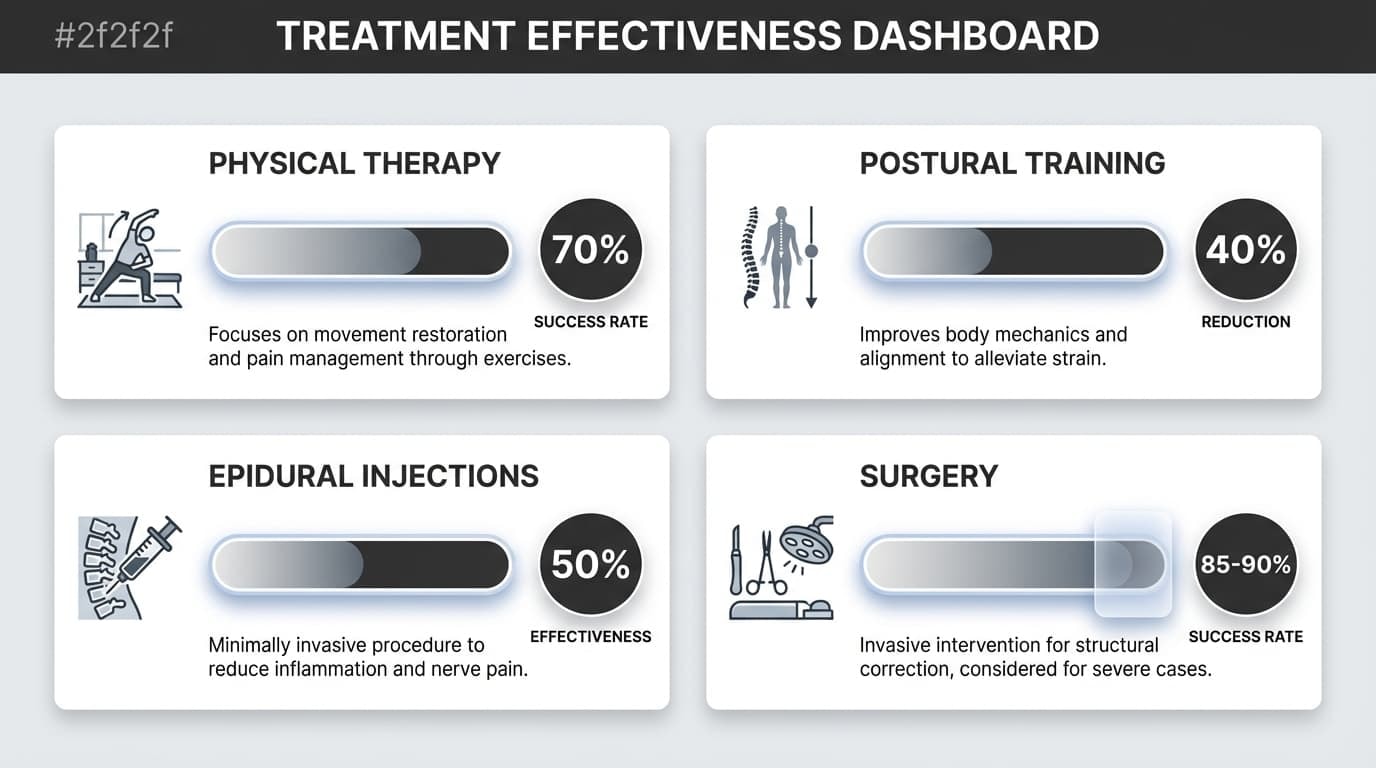
Knee braces can reduce symptoms in the lower limbs, but sciatica begins higher in the body. True recovery requires addressing what is happening around the spine and nerve roots.
Physical Therapy and Postural Training
Physical therapy is one of the most effective treatments for sciatica pain.
Therapy focuses on restoring normal movement in the lumbar region, improving posture, and reducing stress on compressed nerves.
Key benefits include:
-
Reduced nerve irritation
-
Improved spinal alignment
-
Better muscle coordination
-
Lower recurrence risk
Extension programs resolve symptoms in about 70 percent of acute cases within four weeks.
Postural training and core strengthening further reduce recurrence by approximately 40 percent by supporting the spine during daily movement.
Medications, Injections, or Manual Therapy
When pain levels are high, medical treatments may be needed to calm inflammation and allow movement to resume.
Common options include:
-
NSAIDs, which reduce inflammation and offer short-term relief
-
Epidural steroid injections have roughly a 50 percent effectiveness at three months
-
Manual therapy, including spinal mobilization and soft tissue release
These treatments are most effective when used alongside physical therapy rather than alone.
When Surgery Becomes Necessary
Most people with sciatica never need surgery.
Surgical treatment is typically considered only when:
-
Symptoms persist beyond 12 weeks
-
Significant muscle weakness develops
-
Imaging shows severe nerve compression
-
Daily function continues to decline
Microdiscectomy or decompression surgery is required in fewer than 10 percent of cases and achieves 85 to 90 percent success rates.
Surgery is not about speed. It is about protecting nerve function when conservative care fails.
When to See a Doctor About Sciatica and Knee Pain
While many people recover with home care, certain symptoms should never be ignored.
Red Flags That Need Immediate Help
Seek urgent medical care if you experience:
-
Loss of bladder or bowel control
-
Numbness around the inner thighs or groin
-
Rapidly worsening leg weakness
-
Inability to lift the foot or toes
These symptoms may indicate cauda equina syndrome, which occurs in about 1 to 2 percent of sciatica cases.
Immediate treatment is essential to prevent permanent nerve damage.
Persistent Symptoms That Need Evaluation
You should schedule a medical evaluation if:
-
Pain lasts longer than six weeks
-
Shooting pain worsens instead of improving
-
Numbness or tingling spreads into the foot
-
Knee pain or weakness limits daily activities
-
Rest and basic treatment are no longer helping
Persistent symptoms often require MRI imaging or referral to a spine specialist to guide appropriate treatment.
Early evaluation helps prevent long-term nerve injury and shortens recovery time.
Final Thoughts
Knee braces can offer stability, reduce pain, and make daily movement easier for those dealing with sciatica-related knee discomfort. While they help relieve pain around the knee joint, they don’t address the root cause, which is often a pinched nerve in the lumbar region. For lasting relief, focus on full-body sciatica management, including physical therapy, posture correction, and strengthening your core muscles.
If you’re using a brace for sciatica, make sure it fits well, supports the right areas, and doesn’t replace movement. Recovery works best when nerve, radiating, and muscle pain are managed together.
Need a brace that’s easy to wear, low-bulk, and comfortable? The Anaconda Knee Brace provides gentle compression, a stabilizing pressure pad, and support you can feel. It’s a smart option to include in your care plan.
Talk to your doctor to build the right strategy and start your path toward feeling pain-free.
FAQs
Got questions about knee braces and sciatica? Here are the answers you need.
Can a knee brace aggravate sciatica symptoms?
Yes, if the brace is too tight around the fibular head (just below the knee on the outside). Excessive pressure here can compress the common peroneal nerve, potentially increasing foot drop symptoms or lower leg numbness.
Should I wear a back brace instead of a knee brace for sciatica?
A back brace may be more helpful if your sciatica pain starts in the lower back and spreads along the spine or into the buttocks. A knee brace makes more sense if your symptoms include knee instability or leg shooting pain. Some people with radiating pain benefit from both, depending on the location of their nerve compression.
How long should I try a knee brace before deciding if it helps?
Try a brace for sciatica during your daily activities for 1–2 weeks. Look for pain relief, better knee support, and improved stability. If there’s no change in sciatic nerve symptoms after consistent use, it may not be the right brace for you.
Is it safe to exercise with a knee brace if I have sciatica?
Yes, low-impact exercises like walking or swimming are safe to do while wearing a brace. Just make sure your mobility feels supported, and you're not aggravating nerve pain. For better results, combine bracing with physical therapy and core-strengthening exercises.
Are those “acupressure sciatica knee braces” worth buying?
Some knee braces use a pressure pad to target pain signals along the sciatic nerve, offering short-term relief. Clinical proof is limited, but some users find less discomfort during walking or light activity. They may help, but should not replace full sciatica management or medical advice.